Showing posts with label woman in science. Show all posts

Tuesday, February 11, 2025

Katsuko Saruhashi, marine geochemist who measured CO2 in the oceans and showed how radioactivity spread from nuclear testing

Katsuko Saruhashi, linocut print, 9.25" x 12.5" by Ele Willoughby, 2025

This is my hand-carved and hand printed linocut portrait of Japanese geochemist Katsuko Saruhashi (1920-2007) who created tools that allowed her to make the first measurements of CO2 in seawater, raised the alarm about nuclear fallout, tracing it in the oceans, and researched peaceful uses of nuclear power. A supporter of women in science, she established the Society of Japanese Women Scientists and the Saruhashi Prize for Japanese women researchers for excellence in science and mentoring women scientists. Each print is 9.25” x 12.5” on Japanese kozo, or mulberry paper. I made this print for the #printerSolstice2425 prompt carbon.

Born in 1920, the story goes that her interest was sparked in science watching raindrops in primary school, wondering about the source of rain. Her parents believed in education, but she had to make a case to leave a secure insurance job at 21 to study chemistry. Her family witnessed how women struggled to support themselves without husbands or fathers in wartime. So her mother thought science might be a good way to ensure financial independence. She studied chemistry at the Imperial Women's College of Science (now Toho University). After completing her undergrad degree in 1943 she worked at the Geochemical Laboratory at the Meteorological Research Institute (now the Japan Meteorological Agency) with her mentor, marine chemist and lab director Miyake Yasuo, who had a strict policy against gender discrimination. She developed the first tool to measure CO2 in the oceans using pH and chlorinity, called Saruhashi's Table. She enrolled in the PhD program at the renowned University of Tokyo in 1957, where she was the first woman to earn a science doctorate. Her dissertation was on "The Behaviour of Carbonic Matter in Natural Water". With Miyake, she showed that oxidation of organic material increased CO2 in the ocean; prior to this, oceanic CO2 levels were attributed to dissolved calcium carbonate (for instance from in sea shells) and that global warming could be mitigated by seawater's supposed ability to absorb CO2. She not only showed this was untenable, she found the Pacific Ocean emits more CO2 than it absorbs! This has dire consequences for climate change. 

With Teruko Kanzawa from 1973 to 1978, she recorded the pH of every rainfall, documenting acid rain over the five-year period at the Meteorological Research Institute in Tokyo. 
 
After WW2 the US persisted in testing nuclear weapons at the Bikini Atoll, roughly 4000 km southwest of Japan, and in 1954 several Japanese fishermen became ill after trawling downwind of the testing site. The Japanese government asked the Geochemical Laboratory to investigate. Measuring small concentrations of radioactive elements dispersed in the ocean is quite a difficult technical challenge. Saruhashi and her colleagues used radionuclides to trace ocean circulation about found dispersion was uneven, circulation went clockwise and radiation-contaminated waters went northeast towards Japan, arriving in just 18 months and at much higher concentrations than on the US Pacific coast. Continued testing could contaminate the entire ocean, even if done in such an isolated place. The U.S. Atomic Energy Force was skeptical and sponsored a lab swap, bringing Saruhashi to the Scripps Institute of Oceanography at UCSD so her methods could be compared with those of US oceanographer Theodore Folsom. The two methods gave very similar results and the precision of her methods were undeniable. Her research provided critical evidence to support the end of above ground nuclear testing during the cold war. 

After her positive experience working with Miyake, Saruhashi noticed how differently she was treated as a woman researcher at the University of Tokyo, where she had to prove her abilities, and at Scripps, where her US counterpart Folsom told her not to bother coming in every day and assigned her a wooden hut to work in. Saruhashi believed firmly science and society were linked and that scientists bear social responsibility and should be engaged with the public. She was the first woman elected to the Science Council of Japan, to win Japan’s Miyake Prize for geochemistry. She won the Avon Special Prize for Women for promoting the peaceful use of nuclear power, and the Tanaka Prize from the Society of Sea Water Sciences. She said, “I would like to see the day when women can contribute to science and technology on an equal footing with men.”  She founded the Society of Japanese Women Scientists to recognize women in science and create a venue for discussion of issues faced by women in science as early as 1958. In 1981, she established the yearly Saruhashi Prize, awarded to a woman scientist who serves as a role model for younger women scientists.

She made a lasting impact on our understanding of human impacts on the ocean, climate, and radioactive contamination, blazed a trail for women scientists in Japan and helped foster the next generation of researchers. 

References

Katsuko Saruhashi, Wikipedia, accessed January 2025

Mast, Laura, Meet Katsuko Saruhashi, a resilient geochemist, who detected nuclear fallout in the Pacific, Massive Science, March 22, 2019

Sunday, February 9, 2025

Margaret Burbidge, B2FH and stellar nucleosynthesis

Margaret Burbidge, linocut, 11" x 14" by Ele Willoughby, 2025

The #printerSolstice2425 prompt this week is iron, so after talking last week about how certain numbers of nucleons are "magic" as you grow increasingly large nuclei, this week, we're talking about how you do that: how you grow nuclei from a single proton to the largest naturally-occurring transuranic elements. Astrophysicist Margaret Burbidge is one of the people instrumental in building our understanding stellar nucleosynthesis, how nuclei are produced in stars and you and I are all stardust. She was the first author of a monumental scientific paper Synthesis of the Elements in Stars, which became known as B2FH from the initials of its authors: Margaret Burbidge, Geoffrey Burbidge (her husband), William A. Fowler and Fred Hoyle. The landmark paper, one of the most-influential in astronomy and nuclear physics, reviewed everything then known stellar nucleosynthesis, how elements are made, backed up the theory with astronomical and laboratory data and in further explained how elements heavier than iron are made and the abundances of the various elements. Generations of astronomers apparently used to joke that "the early Universe made hydrogen and helium, Burbidge, Burbidge, Fowler and Hoyle made all the rest." Elements up to iron can be built up by nuclear fusion, both slow and rapid neutron-capture, in stars and  B2FH also explained how heavier elements are made. At the base of my print is a stellar absorption spectrum of the sort she gathered and used in arguments presented in B2FH and a cross-section of a supergiant star and how nucleosynthesis leads to a nested series of shells where increasingly heavy elements are burned as fuel producing new elements through fusion. The shells from outermost in are: hydrogen (H), helium (He), carbon (C), neon (Ne), oxygen (O), silicon (Si) and iron (Fe). Behind her is space with stars and galaxies to represent her observations.

Born in Davenport, UK, she was the sort of clever child who deduced that she was born exactly 9 months after the November 11 Armistice which ended the first world war, and concluded she was likely conceived when it was announced. Her father Stanley John Peachey was a lecturer in chemistry at  the Manchester School of Technology (now part of the University of Manchester) and her mother Marjorie Stott Peachey had been one of his students. As a small child her father got a patent related to the vulcanization of rubber, which made him enough money to move to the family to London where he set up his own industrial chemistry lab. She was "star-struck" on a ferry trip over the English Channel at the age of 4, away from the bright lights of London, and by 12, she was reading astronomy textbooks by James Jeans, a distant relative of her mother. She and her younger sister Audrey were expected to pursue education and careers. She gained experience working in her father's lab, before his death when she was 17.  She passed the university entrance exams a year early and thus had an extra year at her high school, taken under the wing of the science teacher, where she was given the run of the physics laboratory to perform her own experiments in electricity, magnetism and optics. This was a unheard of opportunity for a young woman in the mid-30s. She went to University College London (UCL) to study astronomy, where she graduated with her undergraduate with first class honours to little celebration with war looming in 1939. She studied spectroscopy at Imperial College and then she proceeded to pursue graduate school at the University of London Observatory. She split her time between her studies and fabricating optical instruments for the armed forces. Her 1943 thesis was on the spectrum of the star Gamma Cassiopeiae. Many of the men in the department were busy with war work, so she was granted more independence and responsibility than might otherwise have been the case. She made observations at Mill Hill observatory, in the cramped space, in the cold under the open dome while German bombs fell nearby. She never complained, being determined always in her work. “Those nights, standing or sitting on a ladder in the dome of the [J. G.] Wilson reflector [at Mill Hill] . . . fulfilled my early dreams,” she later recalled. Upon seeing a photographic plate of a spiral galaxy for the first time, she said it felt almost sinful to be enjoying astronomy so much and be employed as an astronomer.

Since women were denied access to Mount Wilson Observatory, (on the basis there was no women's bathroom), Margaret's 1945 application to use the telescope was rejected.  She wrote about the experience that a “guiding operational principle in my life was activated: If frustrated in one’s endeavor by a stone wall or any kind of blockage, one must find a way around — another route towards one’s goal. This is advice I have given to many women facing similar situations.” She stayed on in London as Assistant Directory of the observatory.

She met theoretical physicist Geoffrey Burbidge who was in grad school at UCL in 1947 and the two were married in 1948. Their personalities and persons contrasted; Geoff was a large guy who enjoyed arguing pugnaciously whereas Margaret was petite and known for her demure, friendly but quiet demeanour. But he was supportive, loyal and good friends even with colleagues with whom he disagreed and her quietness hid her steely resolve. They were a good match and proved a symbiotic team. Her passion for astronomy was so strong she convinced him to switch to theoretical astrophysics and the two collaborated regularly throughout their subsequent careers. They moved to the US for jobs at observatories at Harvard and the University of Chicago (where Margaret was excited to attend a workshop held by Harold Urey and Maria Goeppert Mayer on the abundance of the elements), before returning to the UK. Seeking two positions and telescope accessed required them to move repeatedly. Willy Fowler recalled a "wonderful Charles Laughton replica," that is Geoff looking and sounding like the famous British-American actor, walked into his office, where he was on sabbatical at Cambridge and said, "why don't you work on problems important for astrophysics?" Hoyle had been working on nuclear reactions in stars since before WWII. When Fowler returned to the US he recommended the Burbidges accompany him; Fred Hoyle was already a frequent visitor. Margaret could work at the Mount Wilson Observatory and Geoff at CalTech. But the Director of Mount Wilson wrote to say the single toilet precluded hiring a woman, still, ten years after her application to do a post-doc there. So, ever-pragmatic, they swapped jobs; Geoff took the Mount Wilson job and Margaret the one at CalTech. She had to pose as Geoffrey's assistant every time he purported went to Mount Wilson and live on a separate cottage on the grounds, as a means to gain access. Geoff worked in the dark room and smoked cigars while Margaret did the observing at night. It took until 1965 for Mount Wilson to officially allow women observers. Once in California they worked on their famous 108-page paper with Fowler and Hoyle, after having first collaborated while at Cambridge. The Burbidges had been looking at spectra of stars with unusual surface conditions; these could be due to upward mixing of nuclear reaction products and proved useful in the paper. They suspected neutron-capture. Fowler's nuclear physics group had been calculating cross-sections of reactions necessary to build heavier elements. Margaret wrote the paper while pregnant. The paper showed how elements were formed at various stages of the lifecycle of stars, explained the existence of of all but the lightest elements (which we now know were in fact formed in the Big Bang) and showed how we, and everything but some of those lightest elements are made of stardust.

They had a daughter, Sarah, in 1956. In 1962 they were both hired by UCSD; to get around anti-nepotism rules, Geoffrey was hired by the physics department and Margaret was hired by the chemistry department, until the rule was changed and she too joined the physics department.

Though her observations helped provide evidence of the Big Bang, Margaret and Geoffrey both followed Fred Hoyle into the "steady state" camp, and were skeptical of the Big Bang theory. Hoyle in fact had derisively coined the term "Big Bang" to poke fun at the idea. His idea was that maker was more or less continuously in a steady state. created and density remained constant. Nonetheless, the name Big Bang stuck and the theory is now become accepted by the field at large. Though Margaret, the observational astronomer, unlike Geoff, rarely commented on theoretical matters, so she is not strongly associated with choosing the wrong side of the Big Bang versus Steady State cosmology debate. She rather worked to keep an open mind.

In the '50s and '60s she measured flat rotational curves for spiral galaxies based on optical observations. Later Vera Rubin got similar results and was able to infer the existence of dark matter galactic haloes. In the '60s and '70s she worked on galaxies and quasars, helping to determine their distance, luminosity and internal processes, finding the most distance object then known (which remained the most distant known object for a decade). With access to the Lick Observatory telescope she was in the right place to join the race to find new and more distant quasars, and known for literally racing to work in the couple's 1961 Jaguar Mark II. Geoff on the other hand never learned to drive, though they both loved that car.  Margaret's work on quasars was very important and lead to advancements like the understanding that galaxies have black holes at their centres. The shear distance to these objects was another blow to Geoff's favoured Steady State model; the expansion of the universe due to the Big Bang was needed to explain objects at the cosmological distances. 

In 1972 she declined the American Astronomical Society's Annie Jump Canon Medal because it is only awarded to women. She wrote, “It is high time that discrimination in favor of, as well as against, women in professional life be removed.” This sparked conversation and forced the AAS to look into discrimination on the basis of sex for the first time and lead eventually to the formation of the AAS Committee on the Status of Women in Astronomy. They also changed the rules of the Annie Jump Canon Medal, awarding it only to early career women who choose to apply for it. 

Burbidge was director of the Royal Greenwich Observatory (1972–1973), She was the first woman in any of these roles. She was notably, the first director of the Royal Greenwich Observatory in 300 years who was not made the Astronomer Royal (and the title was bestowed instead on one of her male peers). At various times she attributed this to sexism or a political desire to reduce the influence of the Royal Greenwich Observatory; either way she resigned after 18 months. She was president of the American Astronomical Society (1976–1978), and following her election, she took US citizenship. As president, she got to introduce the first woman to receive the Russel Lecture Award for lifetime excellence in astronomical research: Cecelia Payne-Gaposchkin. Burbidge herself later received the award in 1984. When the US Equal Rights Amendment (ERA) was introduced, but failed to pass in the required minimum of 38 states, Margaret proposed that AAS meetings be banned in states which had not passed the ERA. The proposal was contentious but she succeeded in having it passed. In the '80s and '90s she worked on the development and use of the Faint Object Spectrograph on the Hubble Space Telescope. She was president of the American Association for the Advancement of Science (1983). In 1983, Fowler received the Nobel Prize for his work on stellar nucleosynthesis and expressed his surprise that Burbidge was not included; she of course was circumspect and did not comment. She was the first female president of the International Astronomical Union's commission on galaxies. She was the first woman to win the Bruce Medal. She was awarded the Medal of Science by President Reagan in 1985, was a fellow of the Royal Society, and the Gold Medal from the Royal Astronomical Society. Burbidge was the first director of the Center for Astronomy and Space Sciences at UCSD and worked there until retirement in 1988. Fowler died in 1995. Hoyle died in 2001. Geoffrey died in 2010. Margaret was the sole surviving author of B2FH, until her death at age 100 in 2020 after a fall. She had been one of the great observational astronomers of the 20th century, a role model and trail blazer for women in the field and a strong voice for eliminating bias against women that she had faced in her career.

References

Alpha process, Wikipedia, accessed January, 2025

B2FH, Wikipedia, accessed January, 2025

Burbidge, E. Margaret, Geoffrey Burbidge, William A. Fowler, and Fred Hoyle, Synthesis of the Elements in Stars, Reviews of Modern Physics, vol 29, 4, October, 1957.

Clark, Stuart. Margaret Burbidge Obituary. The Guardian. April 22, 2020.

Cohen, Adam D. In Memoriam: Margaret Burbidge, Pioneering Astronomer and Advocate for Women in Science. American Association for the Advancement of Science, April 8, 2020.

Dillon, Cynthia. Trailblazing astronomer Margaret Burbidge turns 100 years old. University of California. October 17, 2019.

Margaret Burbidge, Wikipedia, accessed January, 2025

Ostriker, Jeremiah, and Freeman Kenneth ; Eleanor Margaret Burbidge. Physics Today 1 September 2020; 73 (9): 60. https://doi.org/10.1063/PT.3.4575

Rubin, Vera C. E. Margaret Burbidge, President-Elect. Science. Vol. 211, Issue 4485, pp. 915-916, DOI: 10.1126/science.7008193 February 21, 1981.

2021Eleanor Margaret Burbidge. 12 August 1919—5 April 2020Biogr. Mems Fell. R. Soc.7111–35http://doi.org/10.1098/rsbm.2021.0017

Skuse, Ben. Celebrating Astronomer Margaret Burbidge, 1919-2020. Sky & Telescope. April 6, 2020

Smith, Harrison. Margaret Burbidge: Pioneering astrophysicist who showed we are all made of stardust. The Independent. April 22, 2020.

Stellar nucleosynthesis, Wikipedia, accessed January, 2025

Trimble, Virginia. E. Margaret Burbidge (1919-2020). Nature. April 27, 2020.


Wednesday, January 17, 2024

Marine Biologist Maude Jane Delap and the Jellyfish


Maude  Delap, linocut, 11" x 14" by Ele Willoughby, 2024
Maude  Delap, linocut, 11" x 14" by Ele Willoughby, 2024

The next prompt for #PrinterSolstice is "cool colours" and I was reminded of the sea, and a woman suggested to me for my women in STEM series. 

This is my linocut portrait of self-taught trail-blazing Irish marine biologist Maude Jane Delap (1866 – 1953) who was the first person to successfully breed jellyfish in captivity and document their full lifecycle, something extraordinarily hard to do. Her work is still cited in laboratory manuals for jellyfish rearing. She made an extensive study of plankton over many years near her remote home on Valentia Island, off Ireland's west coast. She also discovered a sea anemone named in her honour, Edwardsia delapiae. In my portrait she is surrounded by different stages in the blue jellyfish (Cyanea lamarckii) based on her own illustrations of her published research.

Born the seventh of ten children to Rev Alexander Delap and Anna Jane (née Goslett) in Templecrone Rectory, County Donegal, Maude moved with her family to Valentia Island at age 8. Her father had been assigned to the parishes of Valentia and Cahersiveen, and, a keen sailor, he sailed around the coast with two of her brothers. Their possessions, following in a second boat, arrived a little worse for wear. Her mother and the rest of the children travelled by train. While the girls had less formal education than their brothers, they had some progressive primary school education and their naturalist father encouraged Maude and her sister Constance (1868–1935) in their interest in biology and zoology. He himself had published articles in the Irish Naturalist and the whole family were avid naturalists. Maude and Constance became prolific collectors of marine specimen, many of which are still housed by the Natural History Museum, Dublin. Maude and her sister got reports from visiting fishermen of interesting species in all the their catch, for which they would pay a few shillings, encouraging what is now often known as "citizen science" or "community science."  They were sometimes invited aboard to observe finds and jellyfish. Since the family enjoyed boating and fishing, Maude and Constance learned how to handle a boat and would row out alone, exploring the coast and caves. The Fisheries Board granted them part-time access to their steam boat for their research.

The sisters' work lead to a survey by the Royal Irish Academy headed by Edward T. Browne of University College London in 1895 and 1896. Browne was particularly interested in plankton, the floating marine organisms ranging in size from microbes to large jellyfish, which are often the basis of the food chain and indicative of ocean health. Maude and Constance continued with their systematic study, gathering specimen of often tiny jellyfish and plankton by dredging and tow-netting, as well as recording sea temperature and changes in marine life for 28 years! They brought specimen back to the lab to identify and sketch them. Maude's patience, attention to detail, skill with her microscope and as an artist allowed her to document microscopic details of jellyfish structures and organs. Maude corresponded with Browne for forty years until his death in 1937. It's speculated that she had fallen in love with him; it was unrequited and he married a colleague. She sent him a box of violets she grew in her garden each year for his birthday. Browne thanked both sisters in his publications and jointly published research with Maude.

Maude became fascinated by the life cycle of jellyfish. She painstakingly developed a means of keeping them alive in captivity - something which other scientists had struggled and failed to achieve. She determined their diet, at each stage of development, through trial and error and explained the paramount role proper diet plays in being able to keep them in captivity. She changed the water daily, adjusting temperature to match that in the habour, where they thrived, and carefully monitored the jellyfish. She was the first person to breed them successfully in her home laboratory. The life cycle of the jellyfish is unusual: an adult medusa can procreate by producing a planuala (or egg), which implants on a surface like the seafloor and grows into a polyp (which looks a little like a plant rooted in the ground). The polyp can grow into a budding polyp. This stage of the cycle can go either direction; in less than optimal conditions the budding polyp can revert to the polyp stage. In optimal conditions the budding polyp will bud off ephyrae and these eventually grow into adult medusae. Previous to Delap's work, these various stages could be misinterpreted as separate species. She bred four species of jellyfish including Chrysaora isosceles (the compass jellyfish) and Cyanea lamarckii (the blue jellyfish shown in my print) and documented their life cycles and feeding habits and published her results. Her trailblazing research was the first identification of the various life cycle stages (medusa and hydra) that belong to which species. Quite unusually for a woman at the time, Maude published several influential scientific papers under her own name: she published six articles, and three short notes, including two co-authored by Constance. Thanks to her contributions to marine biology she was offered a position in 1906 at the Plymouth Marine Biological Station in England. She declined the job; her father had apparently declared,  "No daughter of mine will leave home, except as a married woman." While this lost opportunity must have been an immense disappointment, she continued her work at home. Leaving Valentia, and her sisters, at age 40 might also have been quite a daunting prospect. Staying in Valentia allowed her to produce her incredible lengthy study of Valentia harbour, and support her unmarried sisters for the rest of their lives, growing and fishing for food and earning income from selling flowers from her garden.

When her father died later that year, the her mothers, two sisters and Maude moved out of the Parsonage and were permitted to use Reenellen House by the Knight of Kerry. There, they hosted many guests including friends, family, visiting scientists and naturalists, and fishermen seeking safety and shelter in bad weather. While remote, Valentia was home to a telegraph station which was the European terminus for the trans-Atlantic cable, a weather station and an observatory, which did lead to a number of visiting engineers, scientists and marine biologist. The Delap sisters were highly-regarded members of their community, who helped run the local cottage hospital and fisherman's hall, known for their charity and generosity but also for wearing outdated Edwardian clothes, both for propriety and economic necessity. Her nephews recalled going fishing in the evening to feed all the guests, along with fruits and vegetables they grew in the garden. They set up a laboratory they fondly dubbed "The Department" which was described by her nephew as an "heroic jumble of books, specimens, aquaria, with its pervasive low-tide smell." Aquaria contained not only jellyfish, but fish, starfish and even a thornback ray Maude reared from an egg. She buried dead marine vertebrates in her garden to recover their skeletons.

In 1920, as the official whale-stranding officer for south west Ireland, appointed by the British Museum and the local contact for interesting wildlife, she was alerted to a stranded 16-foot whale on the rocks beyond the lighthouse. So she rowed out with her handyman, and she correctly identified a rare True's beaked whale, only previously been known from an incomplete US specimen. Unable to save it, she sent its head and flippers (on request) to the Natural History Museum and buried the rest in her garden. The Museum later requested the rest of the skeleton, causing her to dig up her asparagus garden to gather them. The Museum wrote again that two tiny vestigial pelvic bones were missing so Maude dug up her garden again and sieved the soil until she received a telegram from the Museum which read, “Stop! New York Museum informs us that True’s beaked whale does not possess vestigial pelvic bones."  

In 1928, she found a previously undescribed sea anemone burrowing deep into the eelgrass. Named in her honour, the Burrowing Sea Anemone (Edwardsia delapiae) has only been observed in Valentia habour.  In 1936, she was made an associate of the Linnean Society of London. In 1937 she was made an associate member of the Marine Biological Association. She submitted specimen and corresponded with the Natural History Museum from 1894 until 1949, when she was 83. Like her father before her, she submitted observations to Dr Scully’s “Flora and Fauna of Kerry” and both are acknowledged in the text. Maude was also interested in folklore, geology, botany and archaeology and she published several papers in the Kerry Archaeological Magazine. Her grand-nephew recalled Maude, the "old-school Victorian all-round naturalist”, saying, “Wherever we went, she was instantly recognized and greeted with delight”. She died in 1953, and was buried alongside her sisters near Knightstown, Valentia Island, County Kerry. There is now a plaque from the Irish National Committee for Commemorative Plaques in Science and Technology to commemorate her and her work, on the island.


References,

Byrne, Patricia M. Delap, Maude Jane. Dictionary of Irish Biography.

DOI: https://doi.org/10.3318/dib.002516.v1
Originally published October 2009 as part of the Dictionary of Irish Biography
Last revised October 2009
 

M. J. Delap. 1905. Notes on the rearing, in an aquarium of Cyanea Lamarcki, Peron et Lesueur. Annual report of Fisheries, Ireland 1902-03. II (I(ii)) 20-22.

Maude Delap, Wikipedia, accessed January, 2024. 

Muka, Samantha Kay. Maude Delap: Jellyfish Goddess of the North Atlantic, Through the Aquarium Glass blog, October 29, 2012.

Sheehan, Jane. Finding Maude Delap, LIVE – Llŷn, Iveragh Ecomuseum blog, accessed January, 2024

Sheehan, Jane. Finding Maude Delap, Online Lunchetime Talk, LIVE – Llŷn, Iveragh Ecomuseum, YouTube, February 11, 2022.

Sheehan, Jane. Maude Delap Heritage Trail. 27 July 2023. (Accessed January 2024)


Thursday, September 14, 2023

Mary the Jewess The Mother of Alchemy


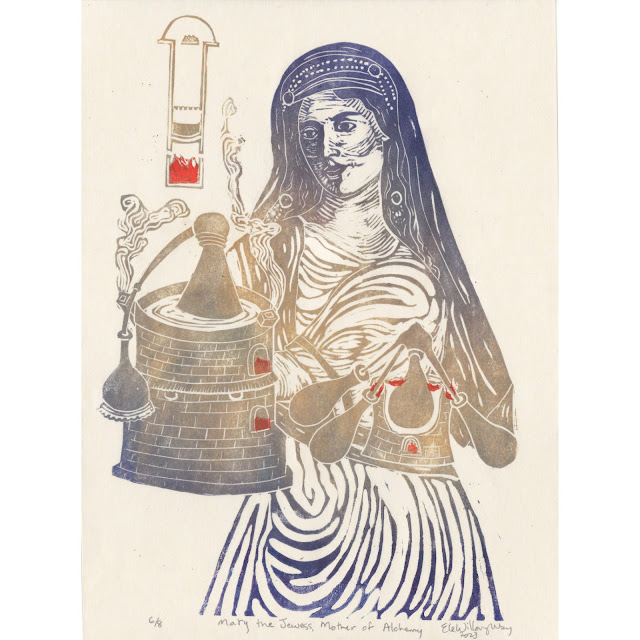
Mary the Jewess, Mother of Alchemy, linocut 11" x 14" by Ele Willoughby, 2023


This is my hand-printed linocut portrait of the earliest recorded alchemist: Mary the Jewess (also known as Maria Hebraea, or Miriam, or Maria Prophetissa). The ancient alchemist Zosimos of Panopolis (who lived in Hellenistic Egypt around 300 CE), cites her research and innovations and calls her "the divine Maria". He even states that she opened an academy for studying alchemy, and taught, "the inner, concealed nature of the metals could be discerned by a complex alchemical process that was revealed to her by God himself and that was to be transmitted only to the Jewish people." She must have predated him, in the early centuries of the common era, and several scholars suspect she lived in Alexandria, Egyptian in the first century. Zosimos relates that she wrote a treatise called "On Furnaces and Apparatuses" and she invented, or at least described ovens, apparatuses for cooking and distilling, and other alchemical experimentation, made of metal, clay, and glass with joints sealed using fat, wax, starch paste, and fatty clay. She favored glass vessels which allowed one to observe reactions without disturbing them and provided some protection fro poisonous materials like mercury, sulfurous and arsenic compounds. Amongst inventions attributed to her are the bain-marie (named in her honour, essentially a double boiler, still used in cooking and chemistry today), the kerotakis (which allowed one to heat items while collecting vapors) and the tribikos (a kind of alembic with three arms that was used to obtain substances purified by distillation, still used in chemistry labs today). The kerotakis was an extractor for vapors which had a metallic palette supported inside to hold samples on which the vapors would act. When working properly it made an airtight seal and we get the term "hermetically sealed" from its use in the "hermetic arts" (that is, in alchemy). It played a role in alchemy and the advent of chemistry up to the late19th century when German chemist Franz von Soxhlet produced the modern, modified kerotakis, known as the Soxhlet extractor in 1879, which is used to this day. I've included these three devices in my portrait. Her name also comes down to us in the term "Mary's Black" for the iron(II) sulfide coating on metal after using the kerotakis. She appears in the writings of other alchemists in the Greek tradition, like Olympiodorus the Younger (c. 495 – 570)  and Christianos in the 7th century, and in the writings of early Arab authors. Arab writer al-Habīb (dates unknown) must have had access to a now lost Hellenistic treatise by or about Mary. The tenth century Arab author Ibn Umail quotes Mary's books with information not found in other sources, suggesting he possessed her actual writings.

Sadly we know very little about Mary's life, but some of her books are quoted by others, and she casts quite the long shadow across centuries of alchemy. Like other alchemists, her words about her explorations of substances are quite mystical and hard to understand. Her axiom, known as the 'Axiom of Maria': "One becomes two, two becomes three, and by means of the third and fourth achieves unity; thus two are but one," was quoted by many alchemists who followed her; C.G. Jung called it a leitmotiv which runs seventeen centuries of alchemy. It's enigmatic and unscientific to the modern reader, but during her life, philosophers in the Mediterranean held an Aristotelian view of mater. She was expressing the idea that all materials were one. Aristotelians believed that mater was composed of four elements (air, fire, earth, and water), with four qualities in opposing pairs (hot/cold and wet/dry). It was commonly believed that by appropriately adjusting the proportions of the four elements by adjusting the balance of the qualities, a material could be transformed into any other. Alchemists in Egypt believed that a base metal like lead could be transmuted into gold with four steps: 1) melanosis, or blackening, to kill the base metal; 2) leukosis, or whitening the metal (using arsenic compounds); 3) xanthosis, or yellowing silver into gold (which might involve sulfur); and 4) iosis, or making the metal violet, which was purported to make it transformable into other metals. Much of their exploration involved producing these colour changes in metals.

Alchemists disguised their works to avoid accusations of witchcraft or sorcery or to keep their research findings secret from most people, so it is hard for us to interpret. Her interests were broader that we tend to assume for alchemists; she was interested in more than attempting to transmute lead into gold or producing the Philosopher's Stone and the Elixir of Life. Alchemy was more a religious view of life for her. She spoke of joining metals of different sexes, or the death of metals - things which do not fit with our modern scientific knowledge. Nonetheless some people credit her with discovering hydrochloric acid. She is credited with inventing the silver sulfide process, still used in metalworking today. She is believed to have discovered caput mortum, a dark purple dye. Though alchemists' understanding of materials was not scientific, the methodologies and apparatus developed definitely involved scientific thinking and form the foundation of what was to become chemistry. Mary's "On Furnaces and Apparatuses" contains the first description of a still. The instruments attributed to her, and her innovations for sealing apparatus were well-designed and played a role in chemistry and cooking for many many centuries or even persist today. And that is truly extraordinary!

My colour scheme is influenced by the deep purple of caput mortum. In Arab texts she was called "Daughter of Plato" - a term used in Western alchemy for white sulfur, so I also use a yellow-gold colour in my portrait. There's a portrait of her in German physician and alchemist Michael Maier's book 'Symbola Aurea Mensae Duodecim Nationum,' but since it was published in 1617, I don't think it actually provides any insight to her appearance or clothing. I was more influenced in imagining what she would have looked like by researching the clothing of Hellenistic Jews of the first to third century of the common era and the frescos of the Dura-Europos synagogue built in Syria in 244 CE. I made this print for the #SciArtSeptember prompt: alchemy.

References 

Cohen, Stephen Michael. "Maria the Jewess." Shalvi/Hyman Encyclopedia of Jewish Women. 25 June 2021. Jewish Women's Archive. (Viewed on September 14, 2023) <https://jwa.org/encyclopedia/article/maria-jewess>.

Hendrickson, Kristin. Maria the Prophetess: Mother of Alchemy, lecture given at Arizona Center of Medieval and Renaissance Studies, Tempe, Arizona, as part of the ACMRS Fearless Females series program, on September 20, 2013, https://www.medievalists.net/2015/07/maria-the-prophetess-mother-of-alchemy/

Lewis, Jone Johnson. "Mary the Jewess, First Known Alchemist." ThoughtCo, Aug. 25, 2020, thoughtco.com/mary-the-jewess-biography-3530346.

Mary the Jewess, Wikipedia, accessed September, 2023

Patai, Raphael. The Jewish Alchemists: A History Source Book. New Jersey: Princeton University Press. pp. 60–91. ISBN 978-0-691-00642-0. 1995

Sacks, Harold. Mary the Jewess and the Origins of Chemistry, SciHi Blog, May 8, 2020. http://scihi.org/mary-the-jewess-origins-chemistry/

van der Horst, P.W. (2002). Maria Alchemista, the First Female Jewish Author. In: Berger, S., Brocke, M., Zwiep, I. (eds) Zutot 2001. Zutot: Perspectives on Jewish Culture, vol 1. Springer, Dordrecht. https://doi.org/10.1007/978-94-017-3730-2_6

Wednesday, March 29, 2023

Love and Butterflies: Victorian Lepidopterist, Scientific Illustrator and Diarist


Margaret Fountaine linocut, 11" x14" by Ele Willoughby, 2023

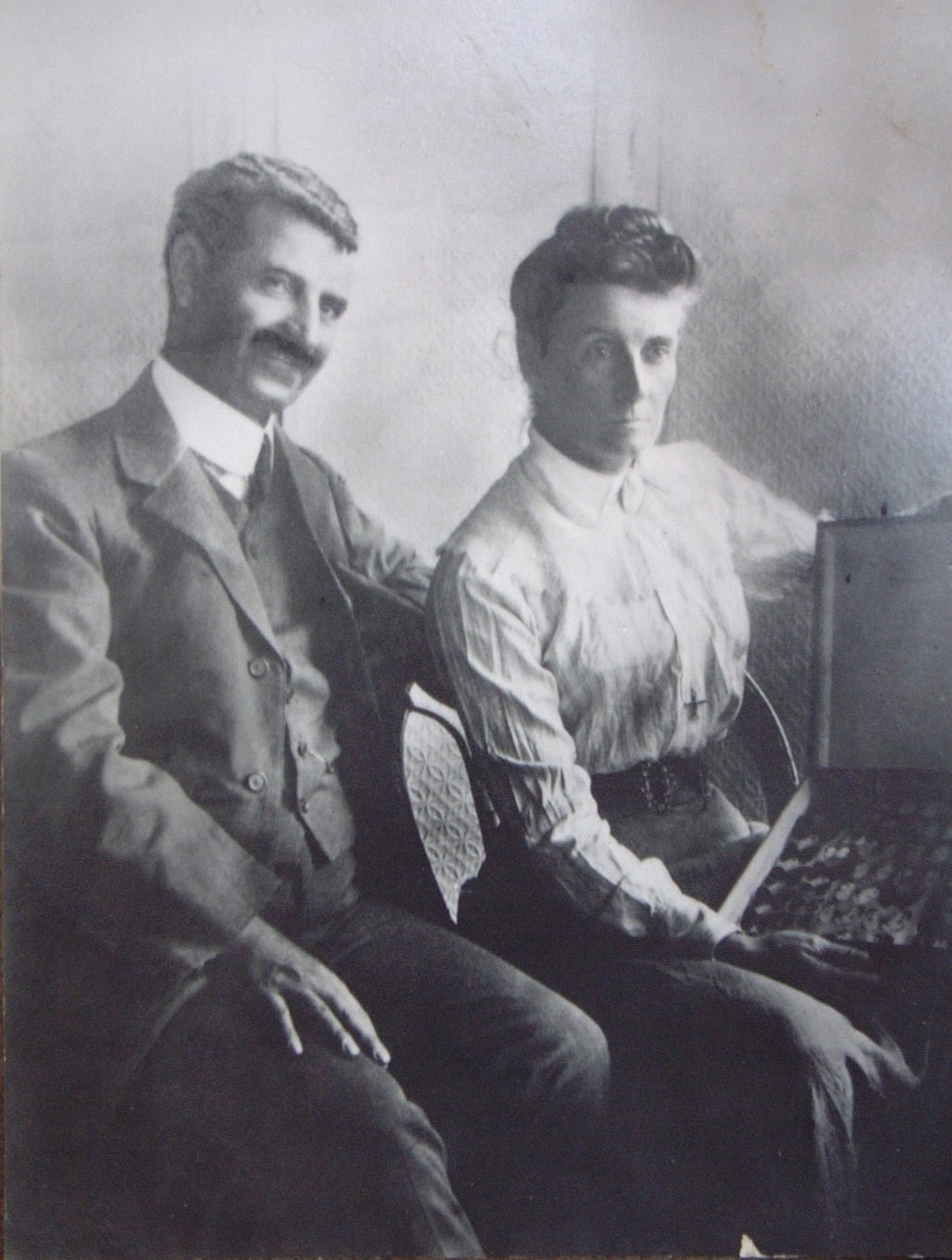
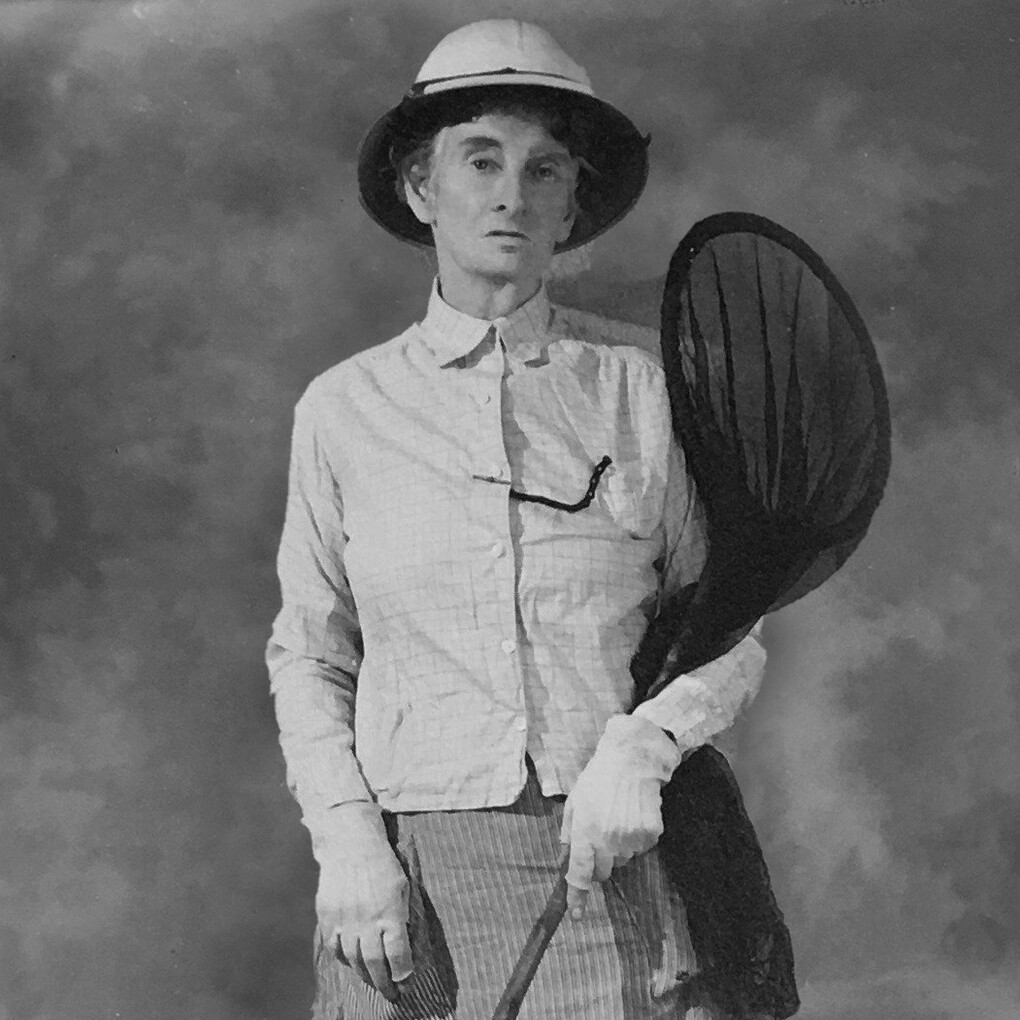
Margaret Elizabeth Fountaine (1862-1940)'s posthumous books featured the somewhat salacious bits of her diaries of her "wild and fearless life," but she was a also trailblazing Victorian lepidopterist, who published in many papers in The Entomologist's Record and Journal of Variations, and was an expert on tropical butterflies, discovering, documenting, breeding and gathering specimen in 60 countries on 6 continents, a talented scientific illustrator, who gathered a collection of 22,000 (bequeathed to the Norwich Castle Museum). She became the only female fellow in the Royal Entomological Society in 1898. She gave scientific lectures internationality on things like "the sagacity of caterpillars." She was the most famous woman lepidopterist of the late 19th and early 20th centuries.


Margaret Fountaine
Margaret Fountaine wore many hats 


The eldest daughter of seven children born to a family of modest means of clergyman John Fountaine
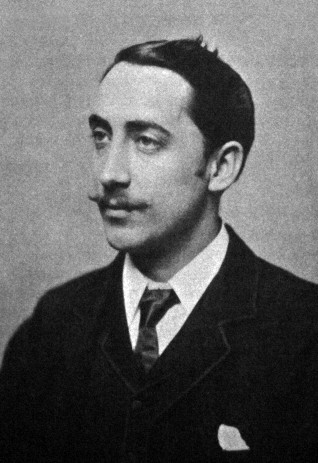
Septimus Hewson,
swindler & object of her affection

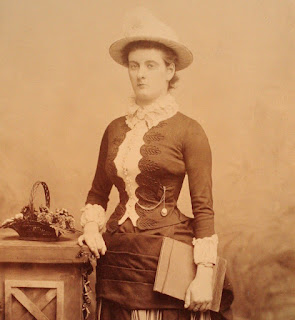
and his wife (also a clergyman's daughter) Mary Isabella Lee, Margaret was born in Norwich.  The family moved to Eaton Grange, Norwich, when her father died. The next year, at 15, Margaret began keeping a diary, a habit she kept up until her death in 1940. Teenage Margaret spent her time in nature, or gossiping with siblings about her crushes. She had already developed her interest in natural history, and her habit of falling for men she saw but didn't know... and recording her anguished feelings in her diary. She spent seven years yearning after an Irish chorister, Septimus Hewson, at her local church, pretending she was painting interior scenes of the church as an excuse to essentially stalk him. She wrote angrily in her diary if she spotted him talking to other women, though she herself had never dared speak to him. Sadly for Margaret, Septimus was a drunk and a swindler who thrown out of Norwich in disgrace. So Margaret claimed she was visiting some respectable ladies in Dublin, but snuck away to follow Septimus to Limerick and profess her love. He apparently reciprocated and she considered herself engaged. She returned home and wrote to him of her joy that her years secretly pinning after him would end with their marriage. After weeks of silence his own relatives wrote to her that she would be best to forget him; he had betrayed everyone he knew and squandered all his money on booze. She found herself nearing 30, a spinster by Victorian standards, with no prospects and no plan. But the death of a wealthy uncle when she was 27 had giving her and her sister the freedom to make choices that few of her contemporaries could enjoy. 

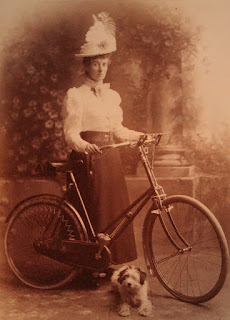
Margaret Fountaine with bike
Margaret Fountaine 
with bicycle and fabulous hat   

Her first move was to leave, and escape her painful memories of unrequited love. So she headed to the continent with her sister, touring France and Switzerland by bicycle, where she found a way to dull her pain by encouraging a series of men's affections and then scorning them She wrote, "it was the pleasure of inflicting that pain that my soul was craving for. I could do it - I had the power. I had learnt it now at last." She became more serious in her butterfly collecting, using Latin rather than common names. She settled in Milan, encouraged by a teacher who told her she could have a career in opera. The workload, training, lifestyle and uncertainty of success were not for her but she kept up her studies until 1895 when she met Henry John Elwes,  Fellow of the Royal Society, vice-president of the Horticultural Society and a passionate butterfly collector, at his UK estate. Butterfly collecting was not uncommon for Victorian ladies, but Margaret did not do things by half-measures.  Margaret realized this could be her life's purpose. Unlike hobbyists Margaret sought out not just to gather, but to document and breed species and to travel anywhere, no matter how inhospitable, to do so, tracking elusive species through European mountains, African deserts, South American jungles, Indian plains, Australia and islands of the South Pacific.  

Margaret and Kalil, around 1912

Much of this work, for better or worse, was done in partnership with a dragoman (a sort of local fixer/interpreter and guide) Khalil Neimy, 15 years her junior, which
we know because she noted his help (when many peers did not bother) whom she met in Damascus. Though secretly married, he declared his love for her, and they spent many years of a tumultuous relationship together, travelling the world and collecting butterflies, and, in while South America, she developed means of rearing butterflies. She shared her knowledge freely with fellow collectors and entomologists, and though not dedicated to writing up her scientific results, her reputation was such that she was invited to join the prestigious Linnean Society in 1912. 

Margaret with her butterfly net
WWI hit her income as her investments plummeted in value, and for the first time she needed to earn money. She worked first as a simple cataloguer for a private collection in California and then, with her reputation for being able to find species no one else could, she started to receive collection commissions. This allowed her to continue to finance her travels and expeditions. Neimy confessed he was secretly married and was slow to get a divorce so they could marry. Also, as an Ottoman citizen, if they did marry, she would automatically become an Ottoman citizen, which she did not want. He struggled to get UK citizenship, seemingly forgetting that he also had US citizenship. But he died in 1928, and then Margaret discovered she was still seeing his wife, and fathering children while pursuing her. His loss, along with her sister's death and other family woes left her with less enjoyment of her life. But, she began to receive professional recognition and find herself the star of entomological gatherings, as she continued her fieldwork into her seventies. She died butterfly net in hand in the jungle, likely of a heart attack, discovered by a local monk. 

References

Dale DeBakcsy, Love and Butterflies The Adventures of Victorian Lepidopterist Margaret Fountaine, Women You Should Know, January 15, 2020

David Waterhouse, A Love of Butterflies - The Fountaine-Neimy Collection, Norwich Castle Museum and Art Museum, July 2, 2021

Florien Duijsens, Podcast # 27: Margaret Fountaine, Dead Ladies Show, November 19, 2019

The captivating life of a leading lepidopterist, KL Magazine, accessed March, 2023

Margaret Fountaine, Norfolk Women in History, accessed March, 2023

Margaret Fountaine, Wikipedia, accessed March, 2023

Thursday, April 12, 2018

Dr. Maud Menten, pioneer of enzyme kinetics, histochemistry, electrophoresis, adventurer and artist

Maud Menten, linocut 9.25" x 12.5" by Ele Willoughby, 2018
Canadian medical researcher Maud Menten (1870-1960) has been called the "grandmother of biochemistry" and "a radical feminist 1920s flapper," and a "petite dynamo." Not only was she an author of Michaelis-Menten equation for enzyme kinetics (like the plot in indigo in my portrait), she invented the azo-dye coupling for alkaline phosphatase, the first example of enzyme histochemistry,  still used in histochemistry imaging of tissues today (which inspired the histology background of the portrait), and she also performed the first electrophoretic separation of blood haemoglobin in 1944!

Born in Port Lambton, Ontario, she studied at the University of Toronto, earning her bachelor's in 1904, and then graduated from medical school (M.B., bachelor's of medicine) in 1907. She published her first paper with Archibald Macallum, the Professor of Physiology at U of T (who went on to set up the National Research Council of Canada), on the distribution of chloride ions in nerve cells in 1906. She worked a year at the Rockefeller Institute in New York, where along with Simon Flexner, first director of the Institute, she co-authored a book on radium bromide and cancer, the first publication produced by the Institute - barely 10 years after Marie Curie had discovered radium. She completed the first of two fellowships at Western Reserve University (now Case Western Reserve University), then she earned a doctorate in medical research in 1911 at U of T. She was one of the first Canadian women to earn such an advanced medical degree.* She then moved to Berlin (travelling by boat, unfazed by the recent sinking of the Titanic) to work with Leonor Michaelis. Together they looked at enzyme-catalyzed reactions, found they occured at a rate proportional to the amount of the enzyme-substrate complex, and developed their famous equation for rate as a function of substrate. This work was critical to understanding how enzymes work and helped scientists develop means of blocking enzyme reactions (such as drugs like statins which inhibit enzymes which make cholesterol).

She returned to North America and studied cancer from 1913 to 1914 in laboratory of the great surgeon George W. Crile at Western Reserve University (now Case Western Reserve University), in Cleveland. She completed a second doctorate in biochemistry at the University of Chicago in 1916. She was unable to find any good research opportunities for women in Canada at the time, so in 1923 she joined the faculty of the University of Pittsburgh as a demonstrator in pathology and also served as a clinical pathologist at Children’s Hospital in Pittsburgh. She held three positions at Children's Hospital involved: surgical pathologist, post-mortem pathologist, and haematologist. Despite holding these multiple demanding jobs she authored more than 100 papers. She discovered the utility of immunization of animals against infectious diseases. In 1944 she was the first to use electric fields to separate different proteins in a mixture based on size - a method called electrophoresis - to separate blood haemoglobin. Her wartime paper received far less attention than later work by Linus Pauling, to the point that this discovery is commonly misattributed to Pauling. Here is yet another example of the Matilda effect, where accomplishments of women in science are often forgotten and attributed to more famous men. This method remains a mainstay of lab techniques for biological systems. She characterised bacterial toxins from B. paratyphosus, Streptococcus scarlatina and Salmonella ssp. then successfully used in an immunisation program against scarlet fever in Pittsburgh during the 30's and 40's. Her research focused on pathology, nucleic acids, tumour cells, scarlet fever, bacterial toxins, and pneumonia. She was known as an outstanding hospital pathologist and teacher, who insisted on excellence in research and who had great compassion for the sick. In due course she was promoted to assistant professor (1923),  and associate professor (1925), but did not reach the rank of full professor until 1949 when she was 70, one year prior to retirement. She had retained her Canadian citizenship throughout her time abroad and on retirement promptly moved home to Canada, joined the British Columbia Medical Research Institute and worked three more years, as long as her health would allow. Arthritis forced her second retirement at 75 and she died at 81 in Leamington, Ontario, a 100 km from ber birthplace.

A painting by Maud Menten
Menten never married or had a family, as mothers were usually prohibited from research, but when not revolutionizing biochemistry and medicine she lead a very full life. She was notorious for driving her Model T Ford badly through the University of Pittsburgh campus from 1918 to 1950. She played the clarinet. She mastered six languages including Russian, French, German, Italian, and Halkomelem of the indigenous Coast Salish, which she learned from school friends during her teens in Harrison Mills, British Columbia, where her father was a ferry boat captain. She was a mountain climber and once went on an Arctic expedition. She was an avid amateur astronomer. I am most charmed that she is yet another example of a scientist who was also an artist. She was a talented oil painter, painting colourful and detailed landscapes, still-life works and florals and she exhibited her paintings.

The University of Pittsburgh, so slow to promote her to full professor, now has a yearly lecture and professorship named in her honour. In 1998 she was inducted into the Canadian Medical Hall of Fame and has been honoured by a memorial plaque at the University of Toronto.  Her obituary in Nature, by Aaron H. Stock and Anna-Mary Carpenter states, "Menten was untiring in her efforts on behalf of sick children. She was an inspiring teacher who stimulated medical students, resident physicians and research associates to their best efforts. She will long be remembered by her associates for her keen mind, for a certain dignity of manner, for unobtrusive modesty, for her wit, and above all for her enthusiasm for research." It is astonishing that she is not a household name as her tremendous accompliments are still central to research today.

*There is some confusion about which degrees she earned, likely because the 1911 Doctor of Medicine degree (M.D.) - equivalent to today's PhD in medicine, was renamed a few years later when a first degree (previously a Bachelor's of Medicine or B.M.) in medicine became an M.D. degree. One source claims she earned three PhDs: in medicine, pathology and biochemistry.

References 

'A Moment in Canadian History' on the Canadian Medical Hall of Fame website, Dr. Maud Menten accessed April 12, 2018

'The Mystery of Maud Menten' on Laurence A. Moran's blog "Sandwalk: Strolling with a skeptical biochemist" accessed April 12, 2018

'Leonor Michaelis and Maud Leonora Menten', Science History Institude, accessed April 12, 2018

Nicolle Hodges, 'Maud Menten: Science Rules', Montecristo Magazine, accessed April 12, 2018

Maud Menten, Wikipedia, accessed April 12, 2018

Tonny Huang, 'Canadian Pioneers in Science: Maud Menten,' June 29, 2017

Rebecca Skloot, 'Pediatric Pathology - Some Called Her Miss Menten' from PITTMED, October 2000, Department of Pathology, University of Pittsburgh, accessed April 18, 2018

'Pediatric Pathology - About Maud L. Menten, MD, PhD,' Department of Pathology, University of Pittsburgh, accessed April 18, 2018

Kara Rogers, 'Maud Leonora Menten: Canadian biochemist and organic chemist'  Encyclopaedia Brittanica, Last Updated:

'Menten, Maud L.' Encyclopedia of World Biography COPYRIGHT 2004 The Gale Group Inc.


Peter G. Mahaffy, Chemistry, Page 762, 2014 -

Maud L. Menten and George A. McCloskey, 'Histopathology and Etiology of Pneumonia in Children Dying after Antibacterial Therapy' Am J Pathol. 1951 Jun; 27(3): 477–491.