Showing posts with label Victorian art. Show all posts

Wednesday, March 29, 2023

Love and Butterflies: Victorian Lepidopterist, Scientific Illustrator and Diarist


Margaret Fountaine linocut, 11" x14" by Ele Willoughby, 2023

Margaret Elizabeth Fountaine (1862-1940)'s posthumous books featured the somewhat salacious bits of her diaries of her "wild and fearless life," but she was a also trailblazing Victorian lepidopterist, who published in many papers in The Entomologist's Record and Journal of Variations, and was an expert on tropical butterflies, discovering, documenting, breeding and gathering specimen in 60 countries on 6 continents, a talented scientific illustrator, who gathered a collection of 22,000 (bequeathed to the Norwich Castle Museum). She became the only female fellow in the Royal Entomological Society in 1898. She gave scientific lectures internationality on things like "the sagacity of caterpillars." She was the most famous woman lepidopterist of the late 19th and early 20th centuries.
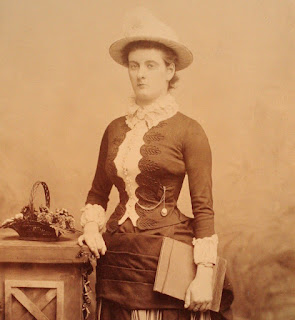

Margaret Fountaine
Margaret Fountaine wore many hats 


The eldest daughter of seven children born to a family of modest means of clergyman John Fountaine
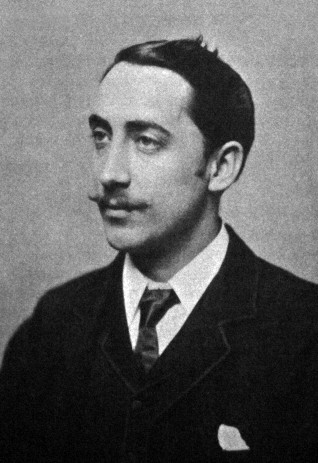
Septimus Hewson,
swindler & object of her affection

and his wife (also a clergyman's daughter) Mary Isabella Lee, Margaret was born in Norwich.  The family moved to Eaton Grange, Norwich, when her father died. The next year, at 15, Margaret began keeping a diary, a habit she kept up until her death in 1940. Teenage Margaret spent her time in nature, or gossiping with siblings about her crushes. She had already developed her interest in natural history, and her habit of falling for men she saw but didn't know... and recording her anguished feelings in her diary. She spent seven years yearning after an Irish chorister, Septimus Hewson, at her local church, pretending she was painting interior scenes of the church as an excuse to essentially stalk him. She wrote angrily in her diary if she spotted him talking to other women, though she herself had never dared speak to him. Sadly for Margaret, Septimus was a drunk and a swindler who thrown out of Norwich in disgrace. So Margaret claimed she was visiting some respectable ladies in Dublin, but snuck away to follow Septimus to Limerick and profess her love. He apparently reciprocated and she considered herself engaged. She returned home and wrote to him of her joy that her years secretly pinning after him would end with their marriage. After weeks of silence his own relatives wrote to her that she would be best to forget him; he had betrayed everyone he knew and squandered all his money on booze. She found herself nearing 30, a spinster by Victorian standards, with no prospects and no plan. But the death of a wealthy uncle when she was 27 had giving her and her sister the freedom to make choices that few of her contemporaries could enjoy. 
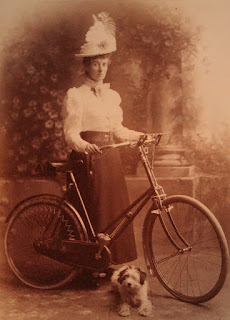
Margaret Fountaine with bike
Margaret Fountaine 
with bicycle and fabulous hat   

Her first move was to leave, and escape her painful memories of unrequited love. So she headed to the continent with her sister, touring France and Switzerland by bicycle, where she found a way to dull her pain by encouraging a series of men's affections and then scorning them She wrote, "it was the pleasure of inflicting that pain that my soul was craving for. I could do it - I had the power. I had learnt it now at last." She became more serious in her butterfly collecting, using Latin rather than common names. She settled in Milan, encouraged by a teacher who told her she could have a career in opera. The workload, training, lifestyle and uncertainty of success were not for her but she kept up her studies until 1895 when she met Henry John Elwes,  Fellow of the Royal Society, vice-president of the Horticultural Society and a passionate butterfly collector, at his UK estate. Butterfly collecting was not uncommon for Victorian ladies, but Margaret did not do things by half-measures.  Margaret realized this could be her life's purpose. Unlike hobbyists Margaret sought out not just to gather, but to document and breed species and to travel anywhere, no matter how inhospitable, to do so, tracking elusive species through European mountains, African deserts, South American jungles, Indian plains, Australia and islands of the South Pacific.  
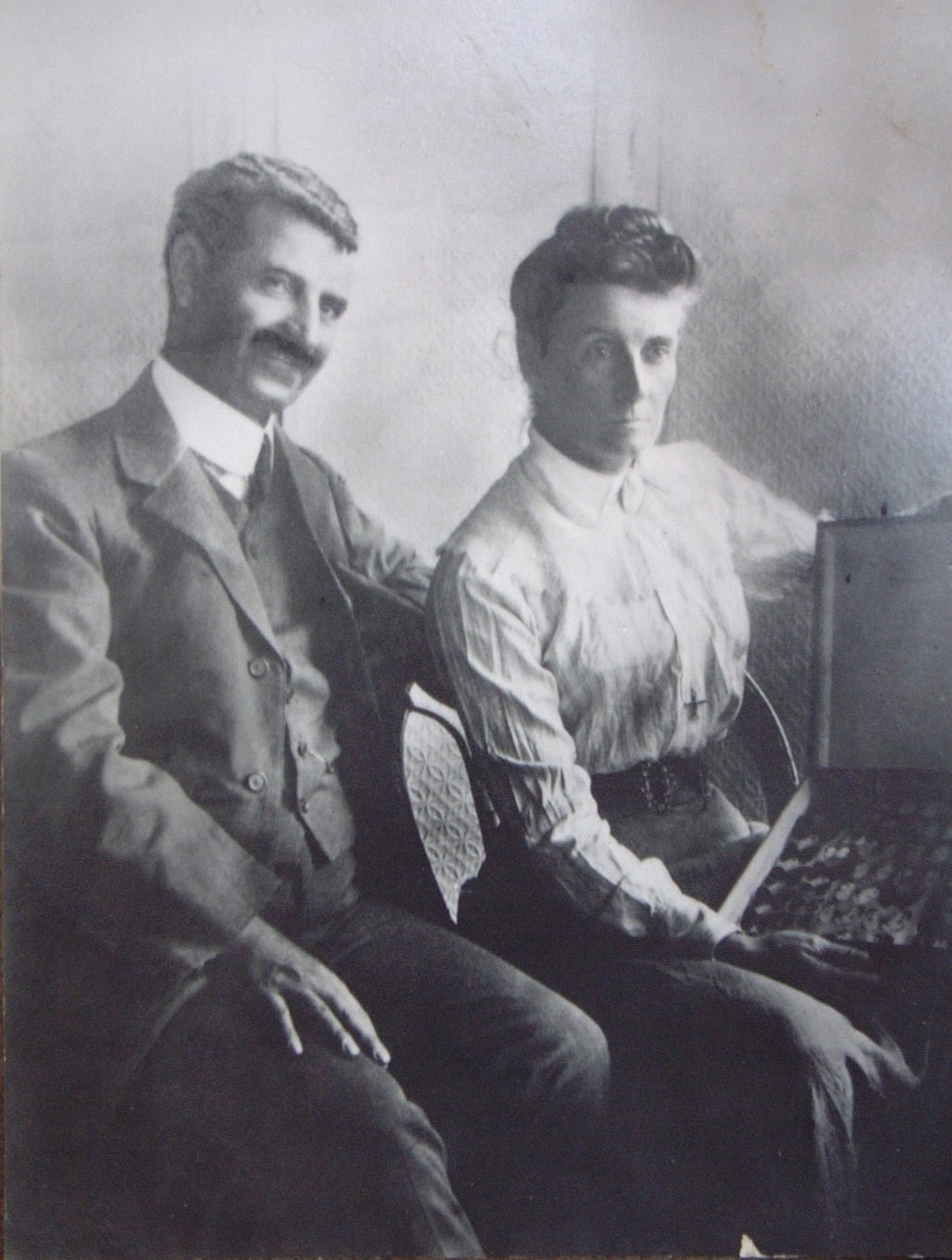
Margaret and Kalil, around 1912

Much of this work, for better or worse, was done in partnership with a dragoman (a sort of local fixer/interpreter and guide) Khalil Neimy, 15 years her junior, which
we know because she noted his help (when many peers did not bother) whom she met in Damascus. Though secretly married, he declared his love for her, and they spent many years of a tumultuous relationship together, travelling the world and collecting butterflies, and, in while South America, she developed means of rearing butterflies. She shared her knowledge freely with fellow collectors and entomologists, and though not dedicated to writing up her scientific results, her reputation was such that she was invited to join the prestigious Linnean Society in 1912. 
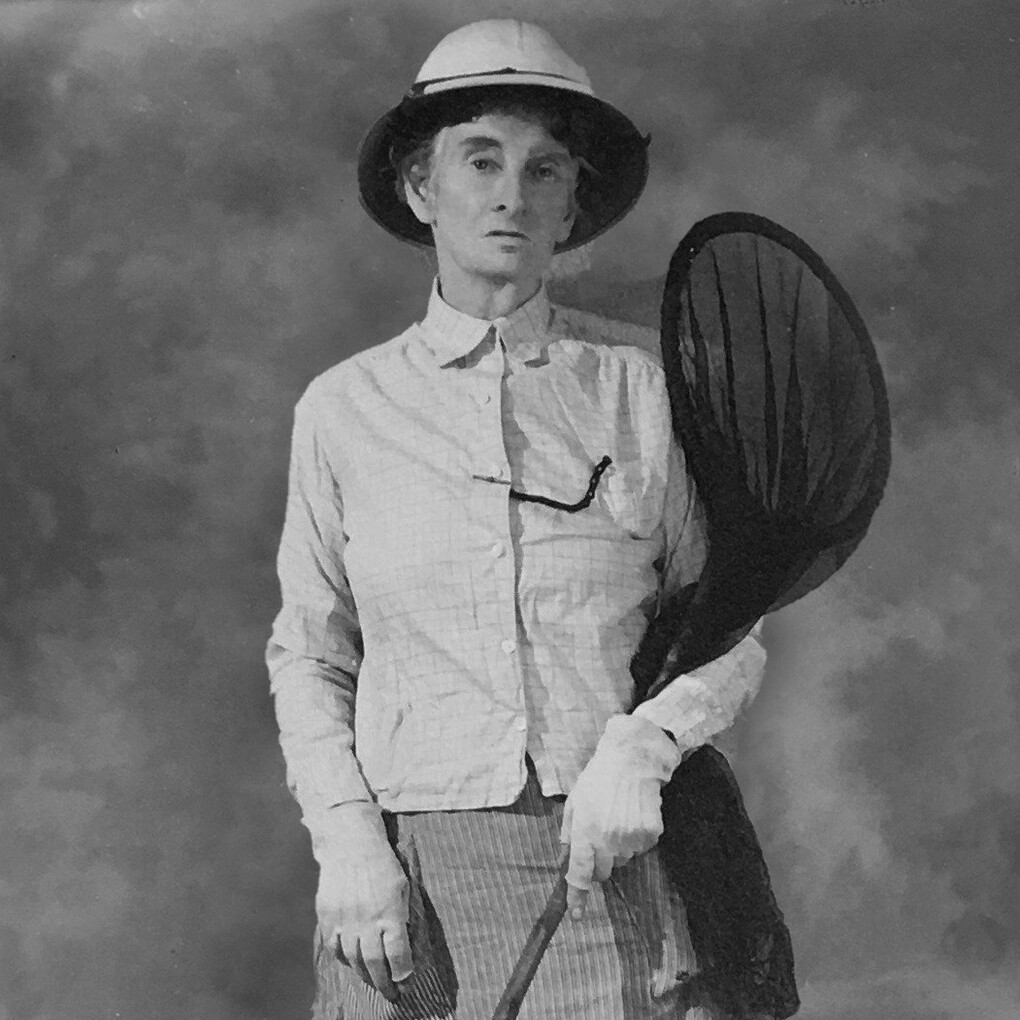
Margaret with her butterfly net
WWI hit her income as her investments plummeted in value, and for the first time she needed to earn money. She worked first as a simple cataloguer for a private collection in California and then, with her reputation for being able to find species no one else could, she started to receive collection commissions. This allowed her to continue to finance her travels and expeditions. Neimy confessed he was secretly married and was slow to get a divorce so they could marry. Also, as an Ottoman citizen, if they did marry, she would automatically become an Ottoman citizen, which she did not want. He struggled to get UK citizenship, seemingly forgetting that he also had US citizenship. But he died in 1928, and then Margaret discovered she was still seeing his wife, and fathering children while pursuing her. His loss, along with her sister's death and other family woes left her with less enjoyment of her life. But, she began to receive professional recognition and find herself the star of entomological gatherings, as she continued her fieldwork into her seventies. She died butterfly net in hand in the jungle, likely of a heart attack, discovered by a local monk. 

References

Dale DeBakcsy, Love and Butterflies The Adventures of Victorian Lepidopterist Margaret Fountaine, Women You Should Know, January 15, 2020

David Waterhouse, A Love of Butterflies - The Fountaine-Neimy Collection, Norwich Castle Museum and Art Museum, July 2, 2021

Florien Duijsens, Podcast # 27: Margaret Fountaine, Dead Ladies Show, November 19, 2019

The captivating life of a leading lepidopterist, KL Magazine, accessed March, 2023

Margaret Fountaine, Norfolk Women in History, accessed March, 2023

Margaret Fountaine, Wikipedia, accessed March, 2023

Friday, June 11, 2021

Imaginary Friends of Geology

Painting by Alexander Craig during the British Association meeting in Glasgow in 1840 when Lyell was 43 years old.
Charles Lyell, by Alexander Craig in 1840 when Lyell was 43 years old.
I’m always on the lookout for new “imaginary friends of science” and periodically I ask for suggestions. My series is made of the charismatic metaphors and thought experiments through the history of science. “Imaginary friend” is a bit tongue-in-cheek but my series includes Schrödinger’s cat, Maxwell’s Demon, Laplace’s Demon, Descartes’ Demon, Russell’s Teapot, Occam’s Razor, the Spherical Cow and Hilbert’s Grand Hotel. My series is skewed towards physics (with some math and philosophy) because that’s my background. I ask for suggestions and biologists just look quizzical but I suspect other fields do this too. It's not an obvious thing to research since this is not really a recognized category of metaphor/thought-experiment, and I coined the term "imaginary friend of science" but you sort of know one when you meet them. Tell me your favourites!

Maxwell's, Laplace's and Descartes' Demons

Recently I got a suggestion from geology for my ‘imaginary friends of science’ series (hat tip to Greg Priest). This imaginary friend is a bit obscure but fits perfectly. Early geologist Charles Lyell (1797-1875), in his famous ‘Principles of Geology’ wrote that to avoid some sources of prejudice in understanding geology would require an Amphibious Being, who could, say, compare processes happening today on land and those happening today below water with what we see in the geological record. Likewise the Amphibious Being would be better able to identify fossils, being familiar with life on land and in the sea. He wrote,

It should, therefore, be remembered, that the task imposed on those who study the earth's history requires no ordinary share of discretion; for we are precluded from collating the corresponding parts of the system of things as it exists now, and as it existed at former periods. If we were inhabitants of another element—if the great ocean were our domain, instead of the narrow limits of the land, our difficulties would be considerably lessened; while, on the other hand, there can be little doubt, although the reader may, perhaps, smile at the bare suggestion of such an idea, that an amphibious being, who should possess our faculties, would still more easily arrive at sound theoretical opinions in geology, since he might behold, on the one hand, the decomposition of rocks in the atmosphere, or the transportation of matter by running water; and, on the other, examine the deposition of sediment in the sea, and the imbedding of animal and vegetable remains in new strata. He might ascertain, by direct observation, the action of a mountain torrent, as well as of a marine current; might compare the products of volcanoes poured out upon the land with those ejected beneath the waters; and might mark, on the one hand, the growth of the forest, and, on the other, that of the coral reef. 

-Charles Lyell, 'Principles of Geology' 9th ed. 1853

James Hutton during fieldwork, by John Kay

He actually goes on to further propose other biases could be avoided only if one could live also in the subterranean world, and hence, a further imaginary friend, "some "dusky melancholy sprite," like Umbriel, who could "flit on sooty pinions to the central earth," but who was never permitted to "sully the fair face of light," and emerge into the regions of water and of air" but such a sprite would have biases due to his lack of access to life on land or in the sea! Here I'm just going to consider the Amphibious Being. 


The Geologist - Carl Spitzweg, circa 1860
While far less well-known than say, Maxwell's Demon or Schroedinger's Cat, the Amphibious Being absolutely performs the same purpose. He's a figment of Lyell's imagination who serves to elucidate and explore a problem in science. The Amphibious Being highlights the possibility that our conclusions about the origins of rocks or fossils  are biased since we only live on land, the same way Maxwell's Demon explores the mysterious nature of the Second Law of Thermodynamics or Schroedinger's Cat exposes the strangeness of the probabilistic nature of quantum mechanics and what that would mean if we saw it in the every day world of large things like well, cats, rather than the subatomic scale. So I plan to add the Amphibious Being to my collection.

Rise of Mr. de Saussure to the summit of Mont Blanc, aquarellée engraving of Christian of Mechel (1737- 1817).

Professor Owen, by Frederick Watty in Cartoon Portraits and Biographical Sketches of Men of the Day (1873)

My question is, what would such an Amphibious Being look like? I made my Demons (Maxwell's, Laplace's and Descartes') ressemble those who introduced them with some additional features like horns. There are a lot of images of Lyell at various ages. He is always wearing a suit, with a magnifying glass or monocle on a chain around his neck.  There are sadly no images of him in the field. I tried to find some images of early geologists or Victorian geologists in particular. It's easy to find depictions of James Hutton (1726-1797) in the field, but not Lyell. Even searching for Victorian geologists in general proved hard. The vast majority of paintings or later photographs show middle class men in suits at home. There are some hilariously heroic posed images of geologists with hammers looking like Classical heroes. I was pleased so see images of Mary Anning, Alice Wilson and other trail-blazing women in geology come up in my search. The Rise of Mr. de Saussure to the summit of Mont Blanc, an aquarellée engraving of Christian of Mechel (1737- 1817), shows that geologists of Lyell's time did in fact where suits in the field, and some of the simple tools they employed: walking sticks, rakes, shovels and packs of supplies. There are also a number of photographs of somewhat scruffier Gold Rush geologists in California or the Yukon. Along with simple tools, geological hammers, magnifying glasses, and collecting bags are common. I wondered also about Victorian caricatures? I have seen cariactures of various well-known historical scientists (even if scientists seem to rarely be the sort of recognizable public figure to appear in cartoons today). So I looked up cariatures of Charles Lyell and was not disappointed.

The caricature by De la Beches of Charles Lyell as Prof. Ichthyosaurus on the pages of Francis Trevelyan Buckland (Son of William B.). "Curiosities of Natural History".
'Awful Changes' - Caricature of Charles Lyell as Prof. Ichthyosaurus, by geologist Henry De la Beche (1796 -1855) on the pages of Francis Trevelyan Buckland (Son of William B.). "Curiosities of Natural History".


Ichthyosaurus caricature published in 1885 in the Punch magazine. The discovery of ichthyosaurus fossils lead to interest in reportings of sea monsters, including for Charles Lyell who wanted to support his idea that animals did not become extict, only rare. He wisely did not include this idea in his geology textbook. (via History of Geology)


The Professor Ichthyosaurus, though an actual, contemporary and amusing cariature of Lyell as a being, which in the cartoon at least, appears amphibious, isn't quite what I want. The itchyosaurus was a marine reptile, not an amphibian. The lecture setting does not suggest fieldwork, nor any greater insight into geology because of its amphibious nature. 

Henry de la Beche, incidentally, famously painted the first paleoart scene, Duria Antiquior, based largely on his friend Mary Anning's findings and he sold lithographic prints of his painting to raise funds to help support her. I thought of him as more modern and kind, in his loyalty and friendship with Mary Anning, a paleontologist who was largely excluded due to her sex, class and religion. But in researching this my opinion of him fell. While he understood slavery was an abomination, since his own income depended on an enheirtance of a sugar plantation in Jamaica worked by enslaved people, he (guiltily) opposed abolition in favour of in favour of gradual change. 'This is wrong but let's not be too hasty' is not an ethical stance.


Duria Antiquior – A more Ancient Dorset is a watercolour painted in 1830 by the geologist Henry De la Beche


And what about the all-important "amphibious" part of my Amphibious Being? My first thought was salmanders. I love the look of gill-stalks and perhaps they suggested Lyell's substantial sideburns. I find the axolotl looks quite anthropomorphic as it is (as reflected in Julio Cortazar's short story, Axolotl).  The axolotl is of course limited in range to Mexico, and though other salamanders go through a larval stage with gill-stalks, this didn't feel quite right or in any way an allusion to Lyell. My next thought was to look at Victorian cariatures of anthropomorphic frogs, which (for reasons I don't entirely understand) was very much a thing. Frog men cariatures and Christmas cards and other illustrations, sometimes to satirize society are pretty common, so I thought that was just the thing.


I am now sketching a Victorian frog-man geologist for my next Imaginary Friends of Science print!