Wednesday, June 28, 2023

Marie-Anne Paulze Lavoisier, Chemist and Scientific Illustrator


Linocut portrait of Marie-Anne Paulze-Lavoisier by Ele Willoughby, 2023
Marie-Anne Paulze-Lavoisier, linocut, 9.25" x 12.5", by Ele Willoughby, 2023

I have been revisiting my entire collection of women in science prints and realized that only Marie-Anne Paulze Lavoisier (20 January 1758 – 10 February 1836) appeared with her husband Antoine Lavoisier (26 August 1743 – 8 May 1794), rather than on her own. I made a double-portrait of the Lavoisiers for an art show about Tarot, where I depicted "The Lovers" card. So, I decided she warranted a single portrait too, as she was a woman in STEM on her own merits. I based her appearance on David's portrait.

The Lavoisiers, working closely together, modernized and quantified chemistry and the scientific method, recognized and named oxygen and hydrogen, explained the role that oxygen plays in combustion, helped modernize chemical nomenclature and discovered that mass is conserved in chemical reactions. Traditionally Antoine has been called the "father of modern chemistry" (with little to no mention of his wife) though more modern scholarship points out that Paulze translated all his contemporaries' works from English and Latin to French (complete with footnotes pointing out errors in chemistry), took notes of all observations, illustrated all experimental set-ups, edited his reports and worked so closely with him we can't easily separate their roles. She was one of the supposed missing women in science and the history of science hiding in plain sight! They commissioned their friend, the famous painter Jacques Louis David to give her lessons in illustration. She clearly illustrated herself in her illustrations of chemical experiments. David also places her front and centre, next to Antoine and their glassware for chemistry experiments, expressing how they worked in concert in his famous portrait of the two. Attributing everything to him alone is clearly not the full picture. She fought to defend his legacy after he was executed during the French Revolution, and kept his name for the rest of her life, even during her short-lived second marriage to physicist Benjamin Thomson, Count Rumford. (She dumped Rumford as soon as she realized that he did not intend for her to work alongside him in the lab.)

Illustration by Marie-Anne Paulze Lavoisier
One of Marie-Anne Paulze-Lavoisier's many illustrations of the chemistry experiments performed in their home laboratory. This was an experiment about respiration and she is seated at her own table, taking data and illustrating what is occurring.


You can also find my portrait of the two Lavoisiers together here and read more about my previous print here.

Portrait of M. and Mme Lavoisier by Jacques-Louis David, 1788 (Metropolitan Museum of Art, Manhattan, New York City)


Friday, April 28, 2023

Some May Day Folk Traditions in Print

I've always been fascinated with May Day traditions, as a May Day baby myself. There are what have been called the "Green Root" (pagan) and "Red Root" (labour) traditions celebrated on the first of May. I've been participating in #FolkloreSunday on Twitter, learning more folklore and using my own artwork to illustrate my own posts. This year seemed like the one to illustrate some of the many "Green Root" traditions of May Day and May Eve like Beltane and Walpurgisnacht.

Jack-in-the-green, linocut, 8" x 10" by Ele Willoughby, 2023

When I participated in #FolkloreWeek last fall, one of the prompts was "tree" and this was the first time I learned about the Jack-Of-The-Green (or Jack O' the Green). I loved the mysterious yet absurd images of walking and dancing men covered in conical wooden or wicker frames covered in foliage, sometimes with a crown of flowers, like a wayward dancing bush leading a procession of characters like the Lord and Lady and a jester, rollicking through the streets. Jack-in-the-green has been part of May Day processions in England since the 1770s. There's a lot of debate about where the tradition came from. Some suspect it arose out of the garlands and floral wreathes worn by milkmaids on May Day, enlarged by the Chimney Sweep guilds (as they celebrated Chimney Sweeper's Day the same day). Others tie it to similar wild men foliage folk figures in continental Europe, pre-Christian fertility figures and the concept of the Green Man. More recent scholarship disputes this connection with the Green Man - but while perhaps not historical the revived 20th century version of the tradition connects the concepts. (You can find more here and here). I have made a Jack-in-the-Green linocut. 


Bonfire, monoprint, 11" x 14" by Ele Willoughby. Hand painted onto a gel plate and printed on water colour paper.
 

Beltane ("lucky fire") is the Gaelic May Day festival held on 1 May, or about midway between the spring equinox and summer solstice (in the Northern hemisphere) has traditionally marked the start of summer. It's tied with mythology and was viewed as a time when fairies were strong and offerings were needed to appease the aos sí. It was one of the most important festivals and there are many traditions. I decided to just illustrate one: the lighting of bonfires. People and livestock often had to move through the smoke, or jump over fires or walk between two fires to guard against sickness and witchcraft. 


Walpurgisnacht, monoprint by Ele Willoughby, 7.75" x 9.875", 2023. Hand painted onto a gel plate and printed on water colour paper.

Bonfires and protection against witchcraft brings us to a May Eve tradition: Walpurgisnacht and Hexennacht (Walpurgis night and Witches' Night as celebrated in Germany). May Eve is the feast day of Saint Walpurga in celebration of her canonization May 1, 870. But folklorists tie it to a more ancient celebration of a moon festival for Walpurga, another name for the Norse goddess Freya of love and beauty who also represented women's magic, sexuality, and independence as well as war and death in battle. She had a magical cloak of falcon feathers and gold necklace, trusty sacred boar friend and a chariot pulled by two cats (cats!). The May Pole can likewise be linked to Yggdrasil, the world tree. Saint Walpurga, amongst other things, apparent fought off witches, so in various European countries, people continue to light bonfires on Saint Walpurga's Eve in order to ward off evil spirits and witches. But in some places people celebrate "Witches' Night", when revelers dress as witches and demons, set off fireworks, dance and play loud music, to drive the witches and winter spirits away. In the Harz mountains the tradition goes back over 1,000 years ago, when people celebrated the arrival of spring  making offerings to the god Wodan (or the Norse god Odin).

These are but a few of the many traditions of this time.


Wednesday, March 29, 2023

Love and Butterflies: Victorian Lepidopterist, Scientific Illustrator and Diarist


Margaret Fountaine linocut, 11" x14" by Ele Willoughby, 2023

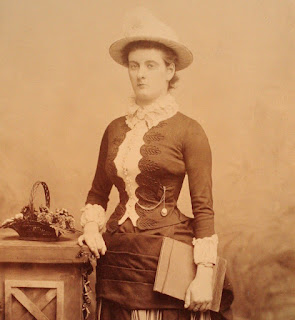
Margaret Elizabeth Fountaine (1862-1940)'s posthumous books featured the somewhat salacious bits of her diaries of her "wild and fearless life," but she was a also trailblazing Victorian lepidopterist, who published in many papers in The Entomologist's Record and Journal of Variations, and was an expert on tropical butterflies, discovering, documenting, breeding and gathering specimen in 60 countries on 6 continents, a talented scientific illustrator, who gathered a collection of 22,000 (bequeathed to the Norwich Castle Museum). She became the only female fellow in the Royal Entomological Society in 1898. She gave scientific lectures internationality on things like "the sagacity of caterpillars." She was the most famous woman lepidopterist of the late 19th and early 20th centuries.


Margaret Fountaine
Margaret Fountaine wore many hats 


The eldest daughter of seven children born to a family of modest means of clergyman John Fountaine
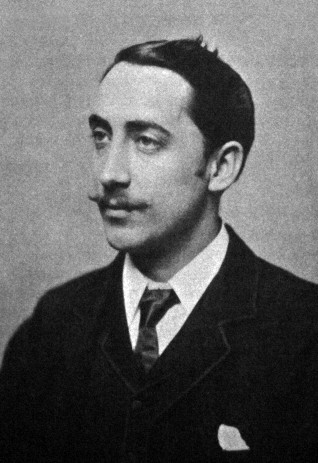
Septimus Hewson,
swindler & object of her affection

and his wife (also a clergyman's daughter) Mary Isabella Lee, Margaret was born in Norwich.  The family moved to Eaton Grange, Norwich, when her father died. The next year, at 15, Margaret began keeping a diary, a habit she kept up until her death in 1940. Teenage Margaret spent her time in nature, or gossiping with siblings about her crushes. She had already developed her interest in natural history, and her habit of falling for men she saw but didn't know... and recording her anguished feelings in her diary. She spent seven years yearning after an Irish chorister, Septimus Hewson, at her local church, pretending she was painting interior scenes of the church as an excuse to essentially stalk him. She wrote angrily in her diary if she spotted him talking to other women, though she herself had never dared speak to him. Sadly for Margaret, Septimus was a drunk and a swindler who thrown out of Norwich in disgrace. So Margaret claimed she was visiting some respectable ladies in Dublin, but snuck away to follow Septimus to Limerick and profess her love. He apparently reciprocated and she considered herself engaged. She returned home and wrote to him of her joy that her years secretly pinning after him would end with their marriage. After weeks of silence his own relatives wrote to her that she would be best to forget him; he had betrayed everyone he knew and squandered all his money on booze. She found herself nearing 30, a spinster by Victorian standards, with no prospects and no plan. But the death of a wealthy uncle when she was 27 had giving her and her sister the freedom to make choices that few of her contemporaries could enjoy. 

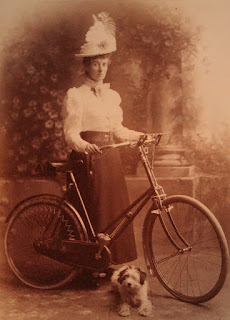
Margaret Fountaine with bike
Margaret Fountaine 
with bicycle and fabulous hat   

Her first move was to leave, and escape her painful memories of unrequited love. So she headed to the continent with her sister, touring France and Switzerland by bicycle, where she found a way to dull her pain by encouraging a series of men's affections and then scorning them She wrote, "it was the pleasure of inflicting that pain that my soul was craving for. I could do it - I had the power. I had learnt it now at last." She became more serious in her butterfly collecting, using Latin rather than common names. She settled in Milan, encouraged by a teacher who told her she could have a career in opera. The workload, training, lifestyle and uncertainty of success were not for her but she kept up her studies until 1895 when she met Henry John Elwes,  Fellow of the Royal Society, vice-president of the Horticultural Society and a passionate butterfly collector, at his UK estate. Butterfly collecting was not uncommon for Victorian ladies, but Margaret did not do things by half-measures.  Margaret realized this could be her life's purpose. Unlike hobbyists Margaret sought out not just to gather, but to document and breed species and to travel anywhere, no matter how inhospitable, to do so, tracking elusive species through European mountains, African deserts, South American jungles, Indian plains, Australia and islands of the South Pacific.  

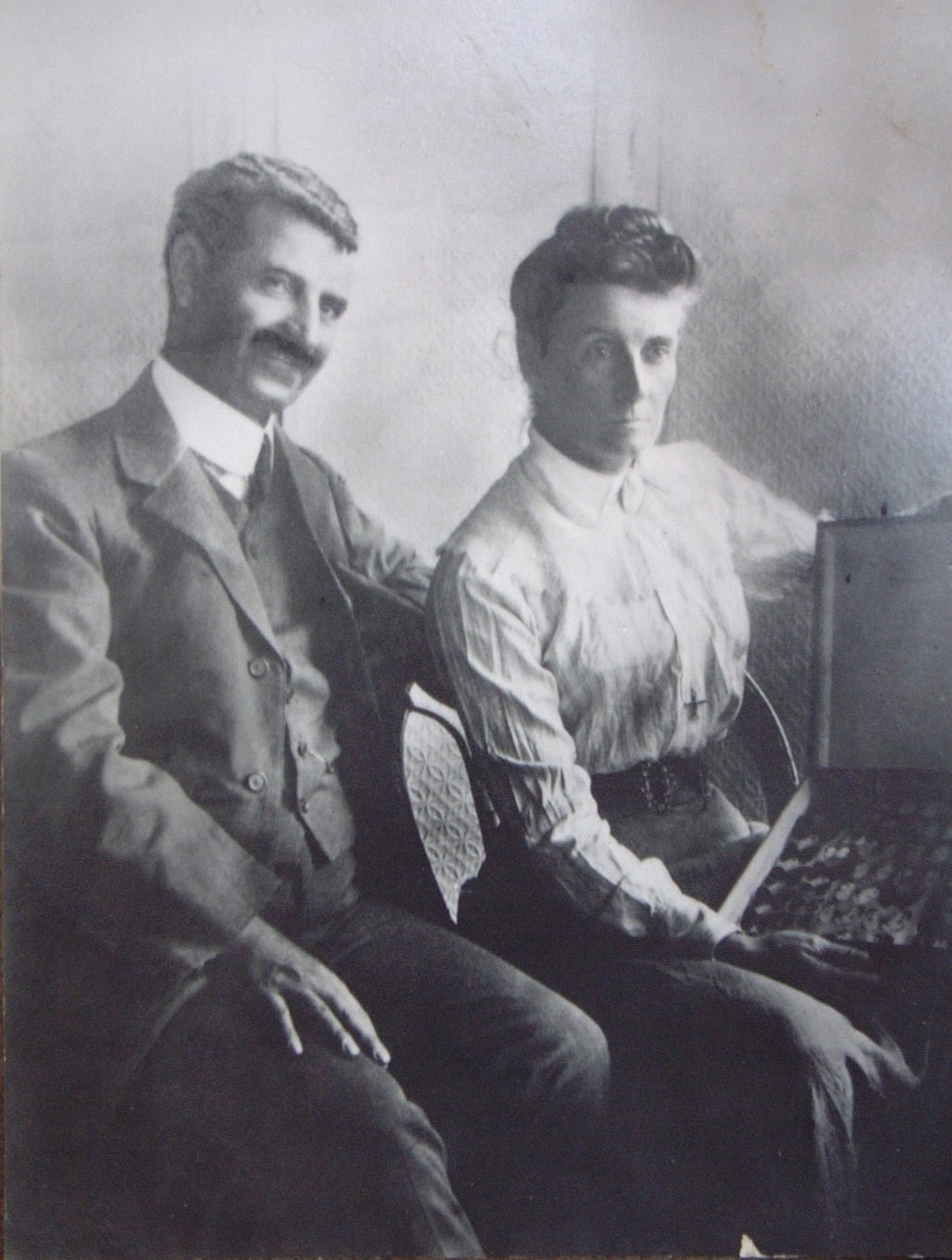
Margaret and Kalil, around 1912

Much of this work, for better or worse, was done in partnership with a dragoman (a sort of local fixer/interpreter and guide) Khalil Neimy, 15 years her junior, which
we know because she noted his help (when many peers did not bother) whom she met in Damascus. Though secretly married, he declared his love for her, and they spent many years of a tumultuous relationship together, travelling the world and collecting butterflies, and, in while South America, she developed means of rearing butterflies. She shared her knowledge freely with fellow collectors and entomologists, and though not dedicated to writing up her scientific results, her reputation was such that she was invited to join the prestigious Linnean Society in 1912. 

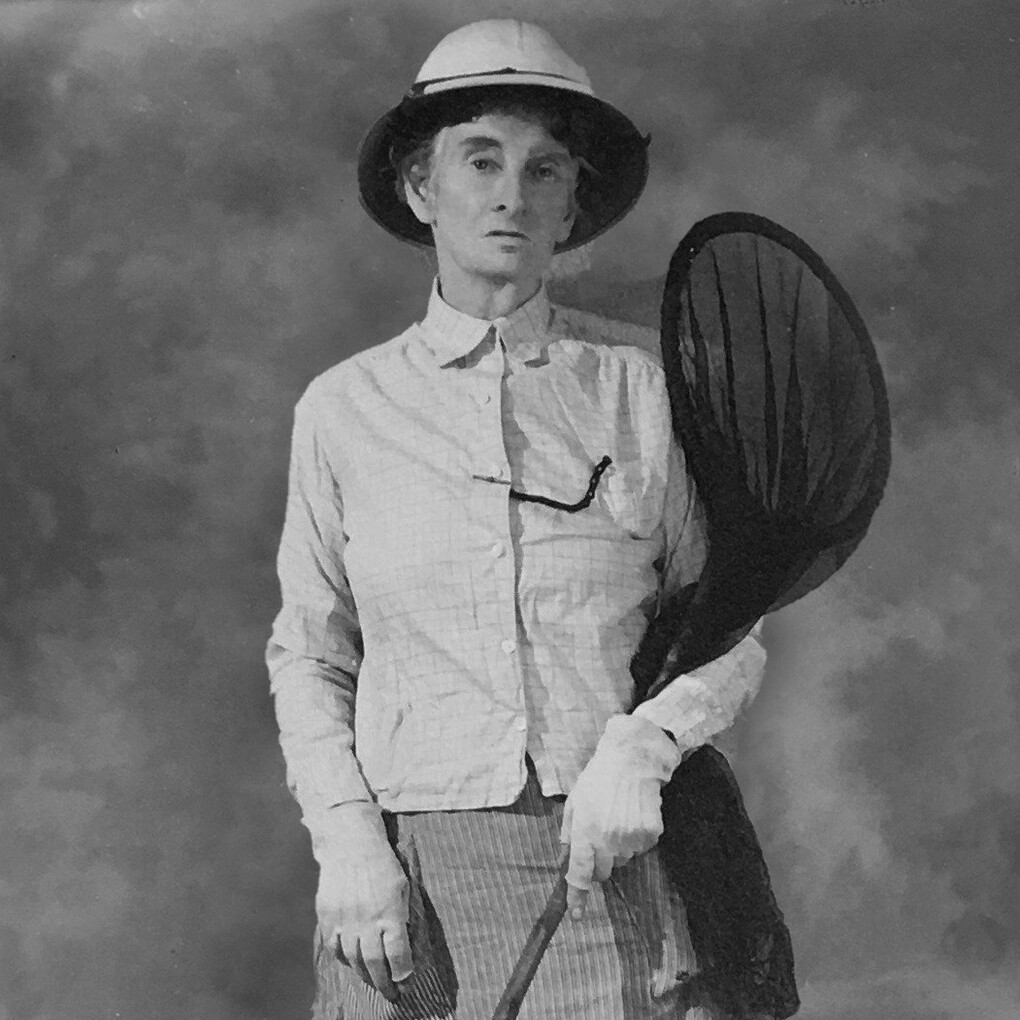
Margaret with her butterfly net
WWI hit her income as her investments plummeted in value, and for the first time she needed to earn money. She worked first as a simple cataloguer for a private collection in California and then, with her reputation for being able to find species no one else could, she started to receive collection commissions. This allowed her to continue to finance her travels and expeditions. Neimy confessed he was secretly married and was slow to get a divorce so they could marry. Also, as an Ottoman citizen, if they did marry, she would automatically become an Ottoman citizen, which she did not want. He struggled to get UK citizenship, seemingly forgetting that he also had US citizenship. But he died in 1928, and then Margaret discovered she was still seeing his wife, and fathering children while pursuing her. His loss, along with her sister's death and other family woes left her with less enjoyment of her life. But, she began to receive professional recognition and find herself the star of entomological gatherings, as she continued her fieldwork into her seventies. She died butterfly net in hand in the jungle, likely of a heart attack, discovered by a local monk. 

References

Dale DeBakcsy, Love and Butterflies The Adventures of Victorian Lepidopterist Margaret Fountaine, Women You Should Know, January 15, 2020

David Waterhouse, A Love of Butterflies - The Fountaine-Neimy Collection, Norwich Castle Museum and Art Museum, July 2, 2021

Florien Duijsens, Podcast # 27: Margaret Fountaine, Dead Ladies Show, November 19, 2019

The captivating life of a leading lepidopterist, KL Magazine, accessed March, 2023

Margaret Fountaine, Norfolk Women in History, accessed March, 2023

Margaret Fountaine, Wikipedia, accessed March, 2023

Tuesday, February 28, 2023

Kitchen Table Mathematics and the Pentagonal Tilings of Marjorie Rice


Marjorie Rice's Pentagonal Tilings
Marjorie Rice and her Pentagonal Tilings, linocut, 11" x 14", by Ele Willoughby, 2023

This is a linocut print of Marjorie Rice (née Jeuck, 1923–2017) who discovered four new pentagonal tilings of the Euclidian plane. Each print is 11" x 14" and printed by hand. Each of her 4 new pentagonal tilings is shown and the design on her shirt is based on her own "Butterflies" tessellation using the Type 13 pentagon (with two right angles and two sides of the same length). I made this portrait for the "pattern" prompt of #printerSolstice.

Born 100 years ago, she grew up poor in Florida, attending a one-room school house, where she skipped two grades, but college was never an option for her. She married conscientious objector Gilbert Rice in 1945 and they moved to Washington, D.C., where he worked in a military hospital and she worked as a commercial artist. They moved to San Diego with their infant son, who did not survive infancy, but went on to have five more healthy children.

Rice had no training as a mathematician, having completed half of a correspondence art course after high school, but she was always interested in mathematics, puzzles and art. She began to follow Scientific American writer and amateur mathematician Martin Gardner's monthly column, rushing to devour the magazine before her son (who had the subscription) could get it. Gardner had reported in July, 1975, in his article, "On Tessellating the Plane with Convex Polygon Tiles," that mathematician Richard Brandon Kershner had finally completed the task of finding all the remaining convex polygons which could make tessellations to tile the plane, an open mathematical problem which had intrigued thinkers since Ancient Greece. But by the next month, one of his readers, Richard James III, had reported that he had found a new convex pentagon tiler. Rice was inspired to start her own search. 

She spent her spare time discretely drawing diagrams on the kitchen table when no one was around which she hid when her husband, kids or friends stopped by. Her daughter assumed she was simply doodling, not discovering new mathematics. She succeeded in her search by February, 1976, and wrote Gardner of her new pentagon type and its variations in shape with which she could tile the plane. Lacking any math education, she had also developed her own notation system to describe shapes. Gardner forwarded Rice's letter to mathematician and tiling pattern expert Doris Schattschneider. Though she was skeptical of Marjorie's odd and unique notation system, which she likened to "hieroglyphics" Schattschneider was able to validate Rice's results. Rice did not stop there. By October she had found 58 pentagon tilings (most previously unknown) of two paired pentagons which could tile "transitively" which she categorized in 12 classes. By December she had found two more new convex pentagon tilers and 75 distinct tessellations by pentagons that were in blocks that could be seen as "double hexagons". By the following December (1977), she found her fourth convex pentagonal tiler and 103 "2-block transitive" pentagon tilings. Through the next decade she continued to find more pentagonal tiling patterns and explored aperiodic tilings and she used her discoveries to make Escher-like tessellation patterns of flowers, shells, butterflies and bees overlain on the geometric shapes (which can still be seen on her website).

Martin Gardner included Rice's discoveries in a collection of his columns 'The Mathematical Gardner', in 1988 and Doris Schattschneider’s article 'In Praise of Amateurs.' Though she was too shy to ever publish her own results or give any talks about her work, Schattschneider convinced Rice and her husband to attend her talk about Rice's work at  a meeting of the Mathematical Association of America held in Los Angeles, in 1995. When she was pointed out in the audience, she received a standing ovation! In 1996, she was the subject of a documentary on CBC's 'The Nature of Things.'

The Mathematical Association of America in Washington, D.C. had one of the ceramic tiles of one of the tilings discovered  installed in the foyer of the headquarters of 1999. Rice's papers and research notes are preserved at the Eugène Strens Recreational Mathematics Collection at the University of Calgary Library. Michaël Rao, with a computer-aided mathematical proof in 2017, established that there are a total of precisely 15 families of convex pentagons, including Rice's 4. He employed her same approach: considering how corners could come together at vertices. Rice was tickled to be recognized and loved being able to discover something new, long sought after by mathematicians 

Sources

Marjorie Rice, Wikipedia, accessed February, 2023

Marjorie Rice, Intriguing Tessellations, accessed February, 2023

Natalie Wolchover, Marjorie Rice's Secret Pentagons, Quanta Magazine Abstractions Blog, July 11, 2017

Anna Weltman, Marjorie Rice, Inspired by Math, and Subways, Math Munch, February 25, 2013

Tiny prints and Unity and Proportion

There's a nifty thing (and hashtag) on Instagram, started by printmaker Kat Flint (@flintkat): #tinyPrintTuesday. There's all these delightful tiny prints in my feed. I wanted to get in on it, and have decided to make tiny linocut prints of animals I have seen in my tiny backyard. I haven't set a specifically size, yet, but these are no more than 4 inches across. It's a great way to use tiny leftover bits of lino and scraps of paper. So far, I have made a cottontail rabbit, skunk and opossum.


Skunk, linocut by Ele Willoughby, 2023


Opossum
 linocut by Ele Willoughby, 2023


Cottontail, linocut by Ele Willoughby, 2023


I have also made a couple of prints for the #printerSolstice series of prompts. For Proportion, I combined my existing golden spiral lino block with my own hand print. For Unity, I had fun once again playing with the concept both literally (in mathematics, unity means 1) and figuratively (with unity of design). I built up a background of radiating colours with my gelliplate and added a linocut 1.

Proportion, 9" x 12" linocut with handprint by Ele Willoughby
Proportion, 9" x 12" linocut and handprint by Ele Willoughby, 2023

Unity, mono print by Ele Willoughby, 2023
Unity, 8" x 10", linocut and gel plate print by Ele Willoughby


Thursday, February 23, 2023

Kathleen Lonsdale, crystallographer, pacifist and prison reformer


Kathleen Lonsdale linocut print by Ele Willoughby
Kathleen Lonsdale, 11" x 14" linocut print on Japanese kozo by Ele Willoughby, 2023

I chose Kathleen Lonsdale DBE FRS (née Yardley, 1903-1971) for the #printerSolstice prompt shape because she solved a longstanding chemistry conundrum of the shape of benzene & her drawing of electron density for hexachlorobenzene (green) & model of hexamethylbenzene explore shape in different forms. 

Going to Holloway prison was the single most formative experience for Kathleen Lonsdale’s scientific career and it gave her the ability to speak to anyone. Her husband said, “Before prison it might have bothered her to go to Buckingham Palace. Afterwards, Holloway or Buckingham Palace were all the same.” Born the tenth child of a poor family in Ireland, with four brothers who died in infancy, pacifist, prison reformer and physicist Dame Kathleen Lonsdale DBE FRS (née Yardley, 1903-1971) served time, as she was unwilling to compromise her beliefs. She was also a trail blazing crystallographer who solved a conundrum which had plagued chemists for decades: the shape of the benzene ring, proving it was flat using x-ray diffraction on hexamethylbenzene in 1929. She was the first to employ Fourier spectral methods and used them to solve the structure of hexachlorobenzene in 1931. In 1945 she was one of the first two women elected Fellow of the Royal Society and was the first woman in several roles including: tenured professor at University College London, president of the International Union of Crystallography and president of the British Association for the Advancement of Science.

Her father, a soldier and then a postmaster Harry Yardley and her mother, a strict fundamentalist Baptist of Scottish descent Jessie Cameron did not have a happy marriage. Between the unrest in Ireland and her father’s alcoholism, her mother decided to divorce and move the children to Seven Kinds, Essex, England when Kathleen was five. She won a scholarship to the Ilford County High School for Girls but had to go to the boys’ school in her final two years as the girls’ school did not offer mathematics and science. During WWI her home was on the Zeppelin route; she did homework by candlelight during air raids and first developed her opposition to war. Anxious to get to university as soon as possible she went to the Bedford College for Women in London on a county scholarship. After her first year she won a university scholarship and switched from mathematics to physics, against all advice (especially that of her old headmistress who told her she would never distinguish herself in physics). She graduated in physics with the highest score ever for a London University, with a BSc in 1922, which brought her to the attention of physics Nobel laureate William Henry Bragg, one of her examiners.

Bragg offered her a spot on his team at University College (and then the Royal Institution), and a grant of a £180 a year! She lived at home and contributed to family expenses, gaining her MSc from University College London in 1924. She worked with Bragg until she married in 1927 and followed her husband, research chemist Thomas Lonsdale to Leeds, where he had been offered a job at the Silk Research Association. Shortly after her marriage, she applied for an 1851 Exhibition Fellowship which Bragg expected she would win, as several of his other (all male) students had done. Not only did they turn her down for the award, they wrote they “would be breaking the spirit of the regulations in awarding an exhibition to a married woman.” Luckily Bedford College offered her a research grant and she continued to correspond with Bragg. She worked part-time as a physics demonstrator and doing lab work in Leeds. It was here that she was given crystals of hexamethylbenzene, the first important structure she solved. Debate had been raging between organic chemists and crystallographers whether benzene was flat or  had a zigzag shape like cyclohexane, but benzene itself was a challenge to crystallize. Lonsdale had the insight that she could instead look at the benzene within hexamethylbenzene and in the process of solving its form, she proved that the benzene ring (which it contained) was flat. She followed this with solving the structure of hexachlorbenzene; this was important as she was the first to investigate an organic compound with Fourier analysis. She had cleverly found a project she could do with calculations rather than lab work while she focused on starting their family. She also developed popular crystallographic reference tables with W.T. Astbury. She considered giving up science, but Thomas supported her research told her he “had not married to get a free housekeeper.” He encouraged her to continue in research. When they had their first daughter in 1929, Bragg convinced the Royal Institution to grant her £50 to employ some childcare  so she could work on calculations. Then they moved back to London for Thomas’ new job, and had a second daughter in 1931. Bragg, anxious to have her back, was able to find a further £200 to assist her at home so she could  return to work in 1931. They had their son in 1934. She earned her doctorate from the University of London in 1936 while working at the Royal Institution, where she stayed for 15 years. She worked with Bragg until his death in 1942, then with Sir Henry Dale, as a Dewar Fellow from 1944 through 1946.


She was raised a Baptist, but in 1935, she and her husband, both committed pacifists, became Quakers. She became a Sponsor of the UK Peace Pledge Union, which meant she signed the pledge "War is a crime against humanity. I renounce war, and am therefore determined not to support any kind of war. I am also determined to work for the removal of all causes of war.” They turned the top floor of their house into a flat where they welcomed refugees from Germany. When she was required to register for civil defence duties during WWII she refused to do so and refused to pay the small fine for not registering. She believed there should be an exemption for conscientious objection. She was sentenced to serve a month in Holloway prison, where the grim conditions lead to a life-long commitment to prison reform. While she was imprisoned, she found the clothing unclean, medical exam sketchy and she collapsed under her workload, scrubbing and cleaning; only then did they lighten her workload. Sir Henry Dale requested that she be given access to papers and instruments and she was allowed to work in her cell in the evenings.  Her colleagues worried she would be bored; she was in fact absorbed, talking to fellow prisoners about their lives and crimes. Her second fine for refusing to register for civil defence was paid anonymously, much to her chagrin; she would have rather stood on her principles and serve another prison term. She contributed to a pamphlet on Prison for Women about her experiences in Holloway and the need for prison reform.

In 1945 Lonsdale and Marjory Stephenson were the first women elected Fellows of the Royal Society. Then she finally got a permanent position. In 1946 she was appointed Reader in Crystallography and then Professor of Chemistry and Head of the Department of Crystallography at the University College London in 1949, finally beginning to teach and run her own research group, mentoring future crystallographers. She was their first tenured female professor. She researched the use of x-ray imaging at different temperatures and the structure and texture of crystals. She worked on the synthesis of diamonds. She won the Royal Society’s Davy Medal for significant discoveries in chemistry in 1957. Later she worked on solid state reactions, pharmacology and structure of methonium compounds and stones and minerals produced by the human body like kidney stones. She became an emeritus professor after 1968. Nobel laureate Dorothy Hodgkin wrote, "There is a sense in which she appeared to own the whole of crystallography in her time.


In 1953 she delivered the keynote Swathmore Lecture at the Yearly Meeting of British Quakers, “Removing the Causes of War”. She wrote about peaceful dialogue was appointed the first secretary of Churches' Council of Healing by the Archbishop of Canterbury. 


When Thomas retired at 60, they moved to Brexill-on-Sea; this meant 5 hours a day commute for Kathleen, but she felt it worthwhile though she was tired. Thomas helped with her tremendous amount of correspondence about peace and prison reform, and would bring her dinner in bed as soon as she got home. She was someone who never stopped working, even when she became ill and was hospitalized. She died in hospital 1971 from anaplastic cancer, at age 68, the day after Thomas' 70th birthday.

References

Kathleen Lonsdale, Wikipedia, accessed February, 2023

Hodgkin, Dorothy M.C., Kathleen Lonsdale, 28 January 1903 - 1 April 1971, Biographical Memoirs of Fellows of the Royal Society, Volume 21, Issue 21, November 1975

Melinda Baldwin, The Royal Society’s first woman physicist, Physics Today, 25 January, 2018. DOI: 10.1063/PT.6.4.20180125a

One crystal model of hexamethyl benzene, Science Museum Group, Object Number: 1993-421/4/11, Gift of University College London, in memory of Dame Kathleen Lonsdale 

Thursday, February 2, 2023

Vera Rubin and What Can't Be Seen

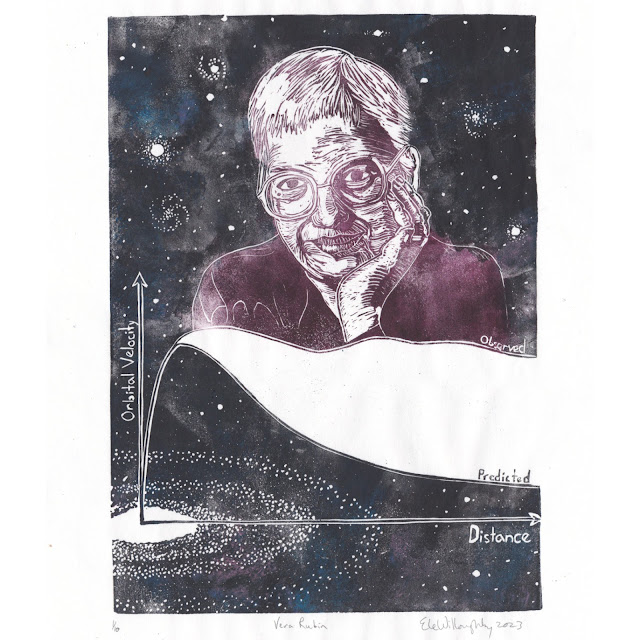
Vera Rubin, linocut on Japanese paper, 11" x 14", by Ele Willoughby, 2023
Vera Rubin, linocut on Japanese paper, 11" x 14", by Ele Willoughby, 2023. The orbital velocity of galaxies is plotted against distance (on top of a galaxy, from its centre outwards). There's a wide gulf between the drop off that would be predicted by Kepler's laws and what was observed. Here, I have left that region white to emphasize that it was evidence of something missing and unseen. So I selected her for the #printerSolstice prompt space, so I could allude to outer space and have the space within the composition be what was telling the story.

This is a linocut print of renown astronomer Vera Rubin (neé Cooper, 1928-2016) and her discovery that the angular motion of galaxies deviates considerably from predictions, which we now know was the first evidence for dark matter, confirmed in the decades since. 

Her parents, Eastern European Jewish immigrants, electrical engineer Pesach Kobchefski (anglicized to Philip Cooper) from Lithuania, and Rose Applebaum from what is now Moldova, met in Philadelphia, working at Bell Telephone; though her mother's job ended when she married. When Vera was 10 they moved to Washington, DC, where she watched stars from her window and first fell in love with astronomy. “What fascinated me was that if I opened my eyes during the night, they had all rotated around the pole and I found that inconceivable. I just was captured,” she later told AIP in 1995.  With her father she built a simple cardboard telescope and tracked meteors. Her older sister went to law school. After she finished high school in '44 she ignored her physics teacher's advice to pursue art rather than science and went to the women's college Vassar, where astronomy trailblazer Maria Mitchell had been a professor as early as 1865. She graduated with honours, the sole astronomy graduate of 1948.

She wanted to pursue graduate studies at Princeton but was barred due to her sex; Princeton took 27 more years to admit women astronomy graduate students. She turned down an offer from Harvard, and instead opted for Cornell where her new husband, physicist Robert Joshua Rubin was a graduate student. During her masters (Cornell, 1951) she studied the motions of 109 galaxies. Hubble flow (or the Hubble-Lemaître law) states that galaxies are moving away from us at speeds proportional to their distance. Rubin was one of the first to observe a deviation from this law. She studied under Philip Morrison, Hans Bethe, and Richard Feynman and worked with astronomer Martha Stahr Carpenter to find a thesis topic on galaxy dynamics. She said that Carpenter's "course in galaxy dynamics really set me off on a direction that I followed almost my entire career.”  Her husband brought her a paper by renown physicist and cosmologist George Gamow who pondered whether galaxies moved like solar systems and it inspired her to start investigating how galaxies move. She found a plane of higher density of galaxies, which years later we would recognize as was some of the earliest evidence of the super galactic plane, the equator of our supercluster of galaxies. 

One of her advisors, Robert Shaw told her that her work was sloppy but should be presented to the American Astronomical Society (AAS) meeting. Since she was not a member, and very pregnant, he could do that - under his own name, not hers. So, she said she could go. She found the discussion after was acrimonious and she felt like an imposter. Her paper was never published. 

She took 6 months maternity leave but found it immensely difficult being at home with their lovely baby but watching her husband going to work daily to pursue what he loved. It was her husband who insisted she return to grad school. He took a job at the National Bureau of Standards in Washington, D.C. She gained experience working summers at the Naval Research Laboratory and the US Naval Observatory. She was admitted to the PhD program at Georgetown University, the only university in Washington, D.C. with a graduate astronomy program, at age 23, expecting their second child. The Jesuit astronomer Fr. Francis Heyden taught his courses at night, a real challenge with a young family. She encountered sexism, and recounted how she was not allowed to meet her advisor in his office as women were barred from that area of the Catholic university. When writing her thesis, Heyden got her in contact with George Gamow, who worked at the nearby Applied Physics Laboratory and was an adjunct professor at George Washington University. Gamow took her on as a student. In her 1954 thesis she noted that galaxies clump together rather than being randomly distributed - a largely ignored idea it took the field decades to catch up with. 

While her four children were very young, she taught at Georgetown and Montgomery College for several years before gaining a research position at the Carnegie Institution of Washington's Department of Terrestrial Magnetism (which operated the Wilson Observatory in California and had a new high-tech magnetically focused electronic image tube which could increase the sensitivity of telescopes). She worked for a year with Geoffrey and Margaret Burbidge observing rotating galaxies using the McDonald Observatory's 82" telescope. She was the first woman to use the Palomar Observatory in 1965, pragmatically solving the lack of washrooms by claiming one by going to her room, cutting out a little paper skirt and pasting it to the little man icon on the door.  "There you go; now you have a ladies' room." At Carnegie she met physicist and astronomical instrument maker Kent Ford. Together they made the most sensitive spectrometer of the day using the magnetically focused image tube- an instrument which divided light into its constituent frequencies and importantly allowed astronomers to study small regions of galaxies previously too dim to observe, not just galaxies in their entirety. They started looking at the newly discovered quasars but she did not enjoy the competition from astronomers with more access to world-class telescopes and the race to explain these objects. She wanted to carve out a niche to themselves. They decided to look at Andromeda Galaxy, returning to her interest in galaxy dynamics with Ford's spectrometer allowing them to see if galaxies did rotate like our solar system. Since mass and hence gravity is clustered in the centre, nearer objects should go faster than objects at the periphery. But, when they looked at areas of hydrogen gas where new stars form, at various distances from the centre of the galaxy, they all seemed to be going at the same speed. The expected drop off with distance simply wasn't there. They spent years on the project, travelling to various telescopes across the country for observing time. Rubin spent long hours analyzing data on punchcards and always seeing the same thing: no drop-off with distance from the centre of Andromeda. So they looked at other galaxies, and more and more galaxies. They gathered dozens of rotation curves and they were all flat. It contradicted theory and they did not know why but their data was undeniable. (You can see a video of how galaxies were predicted to move next to how they are observed to move here).

The concept of dark matter was proposed by Jan Oort (1932) and Fritz Zwicky (1933) to explain how physics seemed to imply more mass than astronomers could see, but they were largely ignored and no one has developed any theory of how galaxies who behave in the presence of dark matter, nor had anyone gathered observational evidence of dark matter. Rubin and Ford simply did not know what their observations meant. "One day I just decided that I had to understand what this complexity was that I was looking at, and I made sketches on a piece of paper, and suddenly I understood it all," Rubin said. A halo of dark matter - that is, matter which is not luminous, which we cannot see with telescopes, perhaps better imagined as invisible or unseeable rather than "dark," around galactic cores would spread out the mass throughout the galaxies, and hence and speeds would remain flat with distance from the centre. This unseen matter that Rubin and Ford first observed is now understood as the stuff that dictates how galaxies move, and even the origin and fate of our universe. 

Since their discovery, a theoretical frame work was set out which fits their model and the Planck satellite measured dark matter by observing the cosmic microwave background. It imaged clumping in the early universe which otherwise would have been homogeneous but which instead, because of this dark matter, evolved into the superclusters of galaxies we know today. We now believe there is five times as much invisible dark matter and the luminous matter we can see. The discovery of dark matter revolutionized astronomy and lead to entire new subfields of astronomy and particle physics. She was a favourite to win the Nobel Prize for many years, but died before that ever happened. Twenty years after Rubin's research revealed dark matter, dark energy was discovered, and its discoverers received the Nobel in 2011. In 2019, three years after her death, James Peebles shared the Nobel Prize in physics for work on evolution of our universe- notably theoretical work on existence of dark matter and dark energy. Many physicists and astronomers lamented the egregious snub of Vera Rubin, by waiting until she had died rather than including her.

She also found evidence that some stars and gas within galaxies move counter to the prevailing motion, some of the first evidence of galaxy mergers.

Throughout her career she was a champion of women in science, writing, “I live and work under three basic assumptions. One: There is no problem in science that can be solved by a man that cannot be solved by a woman. Two: Worldwide, half of all brains are in women. Three: We all need permission to do science, but, for reasons that are deeply ingrained in history, this permission is more often given to men than to women.” She likewise championed scientific literacy.

She published more than 100 peer reviewed scientific papers, a collection of essays, was on the editorial boards of journals and a member of the National Academy of Sciences (the second woman astronomer admitted, after Margaret Burbidge) and won the National Medal of Science. She won the gold medal of the Royal Astronomical Society in 1996; she was only the second woman to do so, 168 years after Caroline Herschel. Carnegie named a post-doc fellowship in her honour and the American Astronomical Society named a Vera Rubin Early Career Prize. There is Vera Rubin Ridge on Mars and Asteroid 5726 Rubin, a satellite and the Vera C. Rubin Observatory named in her honour. All four of her children grew up to be PhD mathematicians and scientists and they credit their mother for making it look like desirable and fun. 

References

Vera Rubin, Wikipedia, accessed January 2023.

Meet Vera Rubin, November 17, 2021, Air And Space Museum, Smithsonian Museum.

Sarah Scoles, How Vera Rubin confirmed dark matter, Astronomy, Tuesday, October 4, 2016 

Matt Schudel, Vera Rubin, astronomer who proved existence of dark matter, dies at 88, Washington Post, December 26, 2016

Rachel Feltman, In memory of Vera Rubin, the woman the Nobel Prize forgot, Popular Science, December 27, 2016

Ethan Siegal, Who Really Discovered Dark Matter, Fritz Zwicky or Vera Rubin? Forbes, August 24, 2021

Chanda Prescod-Weinstein, The Disordered Cosmos, Bold Type Books, New York, 2022.

Kelsey Johnson, We're Sorry, Vera Rubin, Scientific American, October 16, 2019

Shannon Connellan, Nobel Prize in Physics awarded to scientists, some rally behind one who never got one, Mashable, October 8, 2019